Aug 18, 2023 | SEO Tips
Why Websites that Leverage SEO Perform Better Than Relying Solely on Social Media
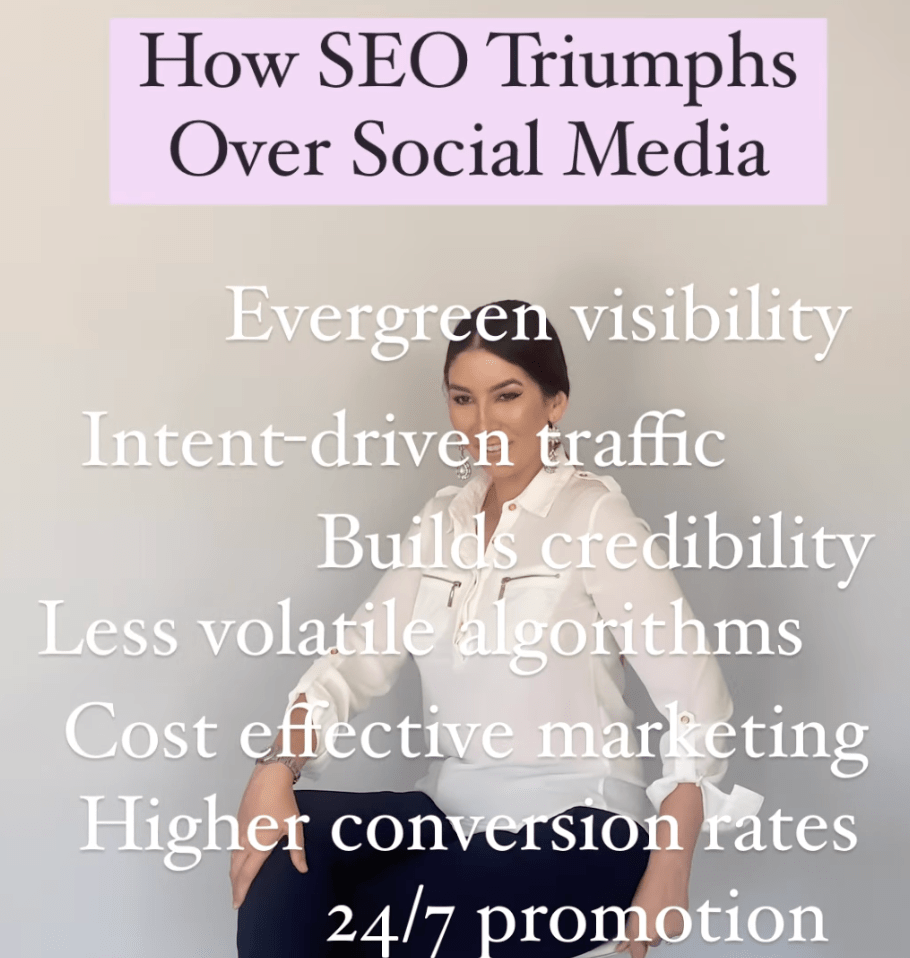
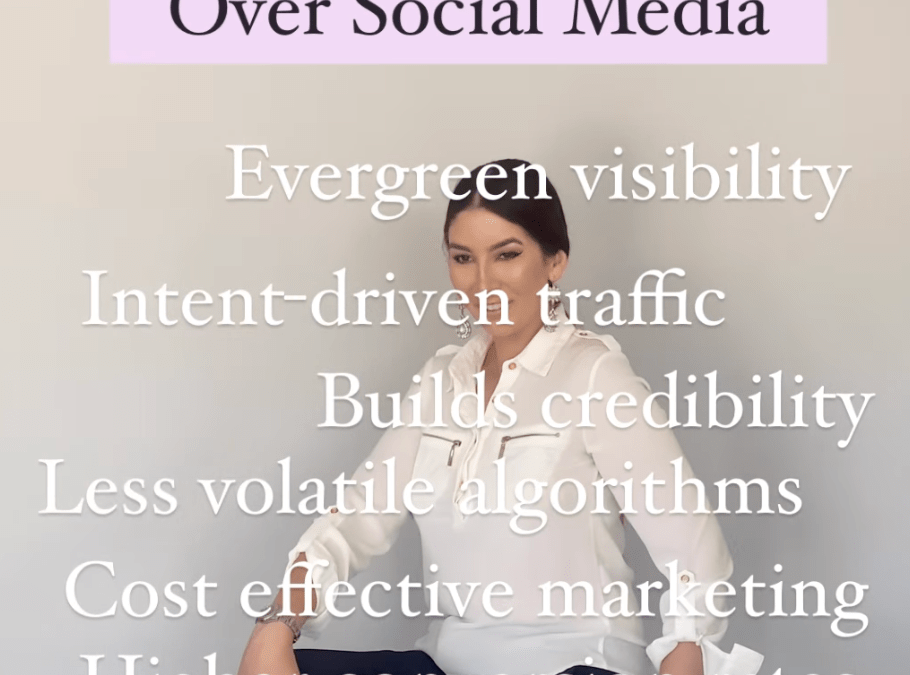
In the ever-evolving landscape of digital marketing, two strategies consistently stand out: Search Engine Optimization (SEO) and Social Media Marketing (SMM). Both have their unique strengths, but a growing body of evidence suggests that websites emphasizing SEO often surpass those that depend exclusively on social media. This comprehensive article delves into the reasons and data supporting this claim, offering insights from an SEO and digital marketing expert’s perspective.
1. Sustainability of Organic Traffic
SEO: Websites fine-tuned for search engines reap the rewards of enduring organic traffic. Once a site achieves a rank for particular keywords, it can sustain this position, drawing steady traffic without further effort. A BrightEdge study reveals that organic search steers 51% of all visitors to B2B and B2C sites, eclipsing all other digital channels. This consistent flow of visitors ensures a steady stream of potential customers, leading to sustainable business growth.
Social Media: Social media posts, on the other hand, have a transient lifespan. As fresh content emerges, older posts become obscured, diminishing their visibility and outreach. This means businesses have to continually produce and promote content to stay relevant, which can be resource-intensive.
2. User Intent and Conversion Rates
SEO: Individuals resorting to search engines typically possess a distinct intent, be it seeking information, purchasing a product, or finding a solution. This pronounced intent frequently leads to superior conversion rates. A Search Engine Journal report underscores that SEO leads boast a 14.6% closure rate. This high conversion rate can be attributed to the fact that these users are actively seeking solutions, making them more likely to engage with the content or make a purchase.
Social Media: While social media can drive significant traffic, these users are often casually browsing. Their primary intent might not be to make a purchase or seek a specific solution, leading to lower conversion rates compared to the high-intent traffic from search engines.
3. Independence from Platform Policies
SEO: SEO methodologies are crafted to cater to search engine algorithms. Though these algorithms experience updates, the foundational principles of SEO remain steadfast. This consistency ensures that businesses can maintain their online visibility with minimal disruptions, even when search engines introduce new features or criteria.
Social Media: Platforms like Facebook and Instagram are notorious for frequently tweaking their algorithms. These changes can drastically impact a brand’s visibility and engagement, often requiring businesses to adjust their strategies on the fly.
4. Broader Audience Reach
SEO: Search engines are universally employed tools. By honing in on SEO, businesses can tap into a vast and diverse audience. This includes individuals from different demographics, regions, and interests, ensuring a broad spectrum of potential customers.
Social Media: While social media platforms boast billions of users, not all individuals frequent every platform. Sole dependence on a handful of platforms can restrict a brand’s outreach, potentially missing out on a significant portion of their target audience.
5. Building Credibility and Trust
SEO: Websites that clinch high ranks on search engine results pages (SERPs) are often viewed as more credible. A Chitika study indicates that the topmost position on Google search results enjoys a 33% likelihood of being clicked. This trust is invaluable in the digital age, where consumers are bombarded with a plethora of options. A high search ranking can be the deciding factor that leads a potential customer to choose one brand over another.
Social Media: While a robust presence on social platforms can amplify brand awareness, it doesn’t inherently translate to credibility. Users often rely on reviews, testimonials, and third-party endorsements to gauge a brand’s trustworthiness on social platforms.
6. Cost-Effectiveness
SEO: SEO is often viewed as one of the most cost-effective digital marketing strategies. While it requires an initial investment in terms of content creation, website optimization, and backlink building, the long-term benefits often outweigh these costs. Once a website is optimized and ranks well, it can continue to attract traffic without significant ongoing expenses.
Social Media: In contrast, maintaining visibility on social media often requires continuous investment. With the decline in organic reach on platforms like Facebook, businesses are increasingly relying on paid promotions to reach their audience. Over time, these costs can add up, especially for small businesses with limited marketing budgets.
7. Less Volatility
SEO: One of the key strengths of SEO is its relative stability. While search engine algorithms do undergo updates, the core principles of good SEO remain consistent. This means that businesses can build their SEO strategy on a solid foundation, with only minor tweaks required to adapt to new updates.
Social Media: The world of social media is far more volatile. Trends come and go at a rapid pace, and what’s popular today might be forgotten tomorrow. For businesses, this means constantly staying updated with the latest trends and adjusting their strategies accordingly.
8. Data and Analytics
SEO: In the digital age, data is king. SEO provides businesses with a wealth of data and analytics about user behavior, keyword performance, and conversion rates. Platforms like Google Analytics offer detailed insights, allowing businesses to refine their strategies, identify areas of improvement, and capitalize on successful tactics.
Social Media: While social platforms do offer analytics, they often focus on metrics like engagement, reach, and likes. While these metrics are valuable, they don’t provide the same depth of insight as SEO analytics, especially when it comes to understanding user intent and conversion paths.
9. Mobile Search Growth
SEO: The rise of smartphones has led to a surge in mobile searches. Today, more people search on mobile devices than on desktops. This shift has made local SEO crucial for businesses. Optimizing for local search ensures that businesses can attract customers right when they’re looking for local solutions.
Social Media: While social media platforms are popular on mobile devices, they don’t offer the same local search capabilities as search engines. This means that businesses relying solely on social media might miss out on the growing segment of mobile search users.
10. Holistic User Experience
SEO: Modern SEO goes beyond just keywords. It encompasses a holistic approach that focuses on the overall user experience. This includes factors like website speed, mobile optimization, user-friendly navigation, and high-quality content. A well-optimized website ensures that users have a seamless experience, leading to higher engagement and conversions.
Social Media: On social media platforms, the user experience is largely dictated by the platform itself. While businesses can customize their profiles and content, they have limited control over factors like navigation, layout, and functionality.
Implementing SEO for Your Business
Grasping the significance of SEO is merely the beginning. Effective implementation necessitates a strategic approach:
- Keyword Research: Pinpoint keywords pertinent to your business and sector.
- On-Page Optimization: Ensure your website’s content, meta tags, and structure are optimized for the identified keywords.
- Off-Page Optimization: Construct high-quality backlinks to augment your site’s authority.
- Content Creation: Consistently produce high-quality, relevant content.
- Technical SEO: Confirm your website loads swiftly, is mobile-friendly, and possesses an XML sitemap for search engines.
For San Diego-based businesses seeking expert guidance, Jen Ruhman is a local SEO firm offering comprehensive monthly SEO services. With a profound grasp of SEO’s intricacies, they can assist your business in achieving and retaining elevated search engine rankings.
The Evolution of Search Engines and Their Impact on Businesses
Over the past two decades, search engines have undergone significant transformations. From rudimentary platforms that relied on basic keyword matching, they’ve evolved into sophisticated systems using artificial intelligence and machine learning to deliver highly relevant results.
Google, the dominant player in the search engine market, continually refines its algorithms to prioritize user experience. This means that websites that offer valuable content, are user-friendly, and have earned authority in their niche tend to rank higher. For businesses, understanding these nuances is crucial. A high rank on search engines can lead to increased visibility, driving more organic traffic to the website.
Moreover, as search engines have become more localized, businesses can now target potential customers in their vicinity more effectively. Local SEO strategies, such as optimizing for ‘near me’ searches and claiming Google My Business listings, have become indispensable for brick-and-mortar businesses.
The Role of Content in SEO
Content is often termed the ‘king’ in the digital marketing realm, and for a good reason. High-quality, relevant content is the cornerstone of effective SEO. Search engines prioritize websites that offer value to users. This means regularly updating your website with informative articles, blog posts, videos, and infographics can boost your SEO rankings.
However, it’s not just about quantity but quality. Every piece of content should be meticulously researched, well-written, and optimized for relevant keywords. Moreover, with voice search becoming increasingly popular, optimizing content for conversational queries is also essential.
The Limitations of Social Media Algorithms
While social media platforms offer businesses a direct line to their audience, they come with their set of challenges. The most significant being their ever-changing algorithms. Platforms like Facebook and Instagram have been reducing organic reach, pushing businesses towards paid promotions. This means that even if you have a substantial follower count, only a fraction might see your posts unless you invest in advertising.
Moreover, these platforms prioritize content that garners high engagement. For businesses, this means continually producing content that resonates with their audience, leading to likes, shares, and comments. While this can boost brand visibility in the short term, it’s not a sustainable strategy for long-term growth.
The Synergy Between SEO and Other Digital Marketing Strategies
While SEO is powerful on its own, when combined with other digital marketing strategies, it can lead to exponential growth. For instance, pay-per-click (PPC) advertising can offer immediate visibility on search engines, complementing the long-term benefits of SEO. Similarly, email marketing can help nurture leads generated through SEO, leading to higher conversion rates.
Moreover, data gathered through SEO analytics can offer insights into user behavior, preferences, and pain points. This data can be invaluable in refining other marketing strategies, be it content marketing, social media advertising, or affiliate marketing.
The Future of SEO
As technology continues to evolve, so will SEO. With the rise of virtual reality, augmented reality, and the Internet of Things (IoT), search will become more integrated into our daily lives. For businesses, staying updated with the latest SEO trends and adapting to these changes will be crucial. Whether it’s optimizing for voice search, creating immersive AR experiences, or leveraging AI for personalized content delivery, the future of SEO promises exciting opportunities for growth.
Conclusion
In the digital realm, where competition is fierce and every brand is vying for attention, having a robust online presence is crucial. While social media offers a platform for engagement and brand building, the sustainable, long-term benefits of SEO make it an indispensable tool for businesses. By focusing on SEO, businesses can ensure consistent traffic, build credibility, and achieve long-term online success. In a world where consumers are increasingly turning to search engines for solutions, ignoring SEO can be a costly mistake. On the other hand, while social media is a powerful tool for engagement and brand building, its transient nature and dependence on platform algorithms make it a less reliable source of consistent traffic. In conclusion, for businesses looking to build a strong online presence and drive sustainable growth, a balanced approach that leverages both SEO and social media is the key to success.
Want to give your business website a boost in search engine rankings?
Contact the SEO company San Diego Trusts. Located in the heart of San Diego, we’re passionate about everything SEO. From in-depth keyword analysis and strategic link building to fine-tuning your content and assessing your website, we’ve got you covered. With our finger on the pulse of the latest Google updates, we’re committed to offering you the insights required to enhance your website’s visibility and increase its traffic.
Embark on a journey towards a stronger online footprint with our expert guidance. We’re excited to be a chapter in your success story. Wondering if Jen Ruhman is the right match for your aspirations? Let’s chat! Give us a call at 619-719-1315 or dive into our website. We’re eager to explore the possibilities for your website together.

Aug 10, 2023 | SEO Tips
Does your business really need SEO?
If you’re asking that question, there’s a good chance you’ve already noticed something isn’t working as well as it should online.
Maybe competitors consistently appear above you in Google. Maybe your website looks great but barely generates leads. Maybe you’re spending more and more on advertising because organic traffic isn’t bringing in enough business.
Or maybe your company simply isn’t showing up when potential customers search for the services you provide.
I’ve worked in SEO for more than 20 years, and one thing I’ve learned is that businesses don’t usually decide they need SEO because they suddenly become interested in search engines.
They decide they need SEO because they have a visibility problem.
SEO helps solve that problem by making it easier for Google, AI search platforms, and potential customers to understand:
- Who your business is
- What services you provide
- Where you provide them
- Why your business is relevant
- Why your website deserves visibility
Here are seven signs your business may need a stronger SEO strategy in 2026.
Table of Contents
Quick Answer: Does My Business Need SEO?
Your business probably needs SEO if potential customers use Google or other search platforms to research, compare, or find the products and services you provide.
Some of the clearest signs include:
- Competitors consistently rank above you
- Your website receives very little organic traffic
- You get website visitors but few qualified leads
- You depend heavily on Google Ads or paid social media
- Your business doesn’t appear prominently in Google Maps
- You don’t know which keywords your customers actually search
- Your website isn’t visible for important service searches
- Your business has little visibility in AI-powered search
SEO isn’t simply about “getting to #1 on Google.”
A strong SEO strategy helps create a website that attracts qualified visitors, builds authority, supports your sales process, and becomes more valuable over time.
1. Your Competitors Consistently Outrank You
One of the most obvious signs that your business needs SEO is seeing the same competitors above you every time you search for an important service.
Let’s say you own a local business in San Diego.
You search for the primary service you provide and see:
- Your competitor in the Google Map Pack
- Your competitor near the top of organic results
- Your competitor appearing for related questions
- Your competitor’s articles ranking for informational searches
Meanwhile, your website is buried on page 2, page 3, or isn’t appearing at all.
That’s not just a ranking problem.
It’s a customer-acquisition problem.
Every time a potential customer searches and discovers a competitor instead of you, that competitor gets an opportunity you didn’t.
This doesn’t necessarily mean their company is better.
It means Google currently has stronger reasons to show their website.
Those reasons may include:
- Better search-intent alignment
- Stronger service pages
- More topical authority
- Better internal linking
- More quality backlinks
- Stronger local signals
- More useful content
- A better optimized Google Business Profile
I’ve written before about why a competitor may be outranking your website. The important point is that rankings are rarely random.
If competitors continually appear above you, I want to understand what signals they’re giving Google that your website isn’t.
2. Your Website Gets Little Traffic or Few Leads
A website isn’t very useful to a business if nobody finds it.
You can have:
- A beautiful design
- Professional photography
- A great logo
- A modern layout
- Excellent services
But if potential customers don’t discover the website, those things alone won’t generate business.
This is something I see frequently.
A business invests thousands of dollars into a new website and assumes customers will somehow start arriving.
But building a website and marketing a website are two different things.
SEO helps connect your website to the searches your potential customers are already performing.
There is another version of this problem, too.
You might be getting traffic but not getting leads.
That can happen when the website ranks for the wrong searches, attracts people who aren’t potential customers, or doesn’t guide visitors toward a clear next step.
I explain this issue further in my article about why websites can get traffic but no leads.
Good SEO isn’t just about increasing the number at the top of an analytics report.
I want the right people reaching the right pages.
3. You’re Too Dependent on Paid Advertising
Paid advertising can be extremely useful.
I don’t believe businesses need to choose between SEO and paid ads as if one must replace the other.
But there is an important difference.
With paid advertising, visibility generally stops when the advertising budget stops.
SEO can build organic assets that continue bringing people to your website over time.
For example, a strong service page may eventually rank for dozens of related searches.
A useful article may continue attracting visitors for years.
A well-optimized Google Business Profile can help generate calls and website visits from local searches.
That doesn’t mean SEO is free.
SEO requires investment in strategy, content, technical work, authority building, optimization, and ongoing improvements.
But you’re investing in assets you own.
If your business receives nearly all its leads from paid advertising and almost nothing from organic search, that’s a sign I would look closely at your SEO strategy.
A healthier digital marketing strategy often includes multiple sources of qualified traffic rather than depending completely on one advertising channel.
4. You Don’t Show Up in Local Search or Google Maps
If you run a local business, this is a major warning sign.
Someone might search:
- Financial advisor near me
- Personal trainer San Diego
- Hair restoration San Diego
- Therapist near me
- Plumber in San Diego
- SEO company San Diego
Google may show a combination of organic results and local map results.
If your competitors consistently appear there and you don’t, you’re missing searches with strong local intent.
Local SEO involves more than putting a city name on your homepage.
It can include:
- Google Business Profile optimization
- Local keyword targeting
- Website optimization
- Reviews
- Business citations
- Location and service-area pages
- Local content
- Internal linking
- Local authority
- Backlinks and mentions
I use these signals together rather than treating Google Maps and a company’s website as unrelated marketing channels.
If local visibility is important to your business, you can read my Local SEO guide for San Diego businesses for a deeper explanation.
5. You Don’t Know Which Keywords Actually Generate Business
This one is more important than it sounds.
I sometimes ask business owners which keywords they’re targeting and hear something like:
“Whatever gets the most searches.”
That’s not necessarily the right strategy.
The keyword with the highest search volume isn’t automatically the most valuable keyword.
I care much more about search intent.
For example, someone searching:
“what is SEO?”
may simply be researching SEO.
Someone searching:
“SEO company San Diego”
is much more likely to be looking for a company to hire.
Those searches have very different business value.
Your website should have a clear keyword map showing which important page targets which search intent.
Without that structure, businesses often make one of two mistakes.
They either don’t target valuable keywords at all, or they create several pages competing for the same keyword.
That’s how keyword cannibalization can develop.
I’ve also written about what search intent means for SEO, because understanding why someone searches is often more useful than simply looking at search volume.
6. Your Business Is Difficult to Find in AI Search
Search behavior has expanded beyond the traditional Google search results page.
People now use platforms and features such as:
- Google AI Overviews
- ChatGPT
- Gemini
- Google Maps
- YouTube
- Reddit
- Other AI-powered search and discovery tools
This doesn’t mean traditional SEO is dead.
It means businesses need to think more broadly about online visibility.
I want both search engines and AI systems to have clear information about:
- Who the business is
- What it specializes in
- Where it operates
- Who its customers are
- What topics it has expertise in
- Whether other trusted sources mention it
A website containing five vague pages and very little supporting information gives these systems less context than a well-structured website with strong service pages, useful supporting content, consistent brand information, and third-party authority signals.
This is one reason SEO in 2026 isn’t simply about inserting keywords into a page.
We’re building a stronger understanding of the business across the web.
If this is an area you’re interested in, I’ve written more about why some websites are invisible to AI search.
7. Your Website Isn’t Becoming More Valuable Over Time
This is one of my favorite ways to think about SEO.
A good business website shouldn’t remain static for five years.
It should become stronger.
Over time, an SEO-focused website can accumulate:
- Ranking keywords
- Quality content
- Backlinks
- Internal links
- Search history
- Brand searches
- Topical authority
- Local authority
- Case studies
- Reviews
- Industry mentions
That’s why I think of SEO as building an asset.
The goal isn’t simply:
“Let’s rank this one keyword.”
The bigger goal is creating a website that Google increasingly understands and trusts across an entire subject area.
This is also why publishing random blog posts isn’t enough.
Content should have a purpose.
Some pages target commercial searches.
Some support important service pages.
Some demonstrate expertise.
Some answer questions potential customers ask before buying.
Some strengthen local relevance.
Together, they create a much stronger website than a collection of disconnected articles.
SEO Is About More Than Rankings
I still care about keyword rankings.
Of course I do.
If an important keyword moves from position 18 to position 3, that’s valuable.
But I don’t believe rankings should be evaluated in isolation.
An SEO campaign should ultimately help create business results.
That’s why I also pay attention to:
- Google Search Console impressions
- Organic clicks
- Qualified website traffic
- Service-page visibility
- Google Maps visibility
- Phone calls
- Contact forms
- Conversions
- Keyword growth
- Brand visibility
A website could rank #1 for a keyword that never generates a customer.
That’s less valuable to me than ranking for searches connected to actual buying intent.
When Might a Business Not Need SEO?
SEO isn’t automatically the right marketing channel for every business.
For example, SEO may be less important if:
- Your customers don’t use search engines to find what you sell
- You have no interest in generating new customers online
- Your business operates entirely through referrals and already has more demand than it can handle
- Your product or service is so new that almost nobody searches for it yet
- You only need immediate short-term visibility for a temporary offer
In some of those situations, paid advertising, social media, outbound marketing, partnerships, or other strategies may deserve more attention.
But for businesses whose customers actively use Google to research services and make buying decisions, organic search visibility can be extremely valuable.
What Should You Do If Your Business Needs SEO?
Don’t start by publishing 50 blog posts.
Don’t buy 1,000 backlinks.
And don’t start adding your favorite keyword to every paragraph on the website.
Start by understanding your current position.
When I evaluate an SEO opportunity, I want to know:
- What does the business sell?
- Which services are most valuable?
- What are customers searching for?
- Which pages already rank?
- Which competitors dominate those searches?
- Where are the website’s technical problems?
- Which pages should be improved?
- Where are the content gaps?
- Are multiple pages competing against each other?
- What authority does the website already have?
From there, I can build a strategy.
Sometimes that means creating new pages.
Sometimes it means improving old ones.
Sometimes the biggest opportunity is internal linking.
Sometimes it’s Local SEO.
Sometimes the business needs better authority and backlinks.
And sometimes I discover that the website is already sitting on page 2 for valuable keywords that could be much easier to improve than starting from scratch.
SEO works best when the strategy is based on what the website actually needs.
Need SEO Help for Your San Diego Business?
If several of these signs sound familiar, your business may be leaving valuable search visibility on the table.
I’ve worked in SEO for more than 20 years and help businesses build sustainable visibility in Google, Google Maps, and today’s evolving AI-powered search environment.
As a San Diego SEO expert, I work directly with my clients to improve website structure, keyword targeting, content, Local SEO, authority, internal linking, and organic visibility.
My goal isn’t simply to send more traffic to your website.
I want to help the right potential customers find your business when they’re actively searching for what you provide.
Learn more about my San Diego SEO services and request a consultation.
Frequently Asked Questions About Whether Your Business Needs SEO
How do I know if my business needs SEO?
Your business may need SEO if competitors consistently outrank you, your website receives little organic traffic, you aren’t visible in Google Maps, you’re overly dependent on advertising, or potential customers have difficulty finding your services through search. SEO is especially valuable when customers actively use Google to research businesses like yours.
Does every small business need SEO?
Not every business depends equally on SEO, but most small businesses can benefit if potential customers use search engines to find or compare their services. Local businesses can particularly benefit from improving their website and Google Business Profile visibility for searches with local intent.
Is SEO worth it for a local business?
SEO can be valuable for local businesses because people frequently search Google and Google Maps when they need nearby services. A strong Local SEO strategy can help a business increase visibility for relevant searches in the geographic areas it serves.
Do I still need SEO if I use Google Ads?
SEO and Google Ads can complement each other. Paid ads can provide immediate visibility, while SEO focuses on building long-term organic visibility and website authority. Businesses that depend entirely on advertising may lose a major traffic source whenever they reduce or pause their ad budget.
Does my business need SEO if I already have a website?
Having a website does not automatically mean potential customers will find it. SEO helps search engines understand your website and connect its pages with relevant searches. A professionally designed website can still receive very little organic visibility if it hasn’t been properly optimized.
Can SEO help if my website gets traffic but no leads?
Yes, but the goal should be to understand why the traffic isn’t converting. Your website may be attracting the wrong search intent, ranking for low-value keywords, sending visitors to weak landing pages, or lacking clear conversion paths. SEO strategy should focus on qualified traffic rather than traffic volume alone.
Do businesses need SEO because of AI search?
AI-powered search has increased the number of places where people can discover businesses, but it hasn’t eliminated traditional SEO. Clear website structure, strong topical relevance, useful content, brand authority, and consistent business information can help both traditional search engines and AI systems better understand a business.
How long does SEO take for a business?
SEO generally should be viewed as a long-term strategy. Some businesses begin seeing early movement within a few months, while highly competitive searches may take six months or longer. The timeline depends on competition, website authority, technical health, existing rankings, content quality, backlinks, and the market.
What should a business do first when starting SEO?
Start by evaluating your current website, search visibility, competitors, target keywords, important service pages, technical issues, internal linking, content, and Google Business Profile. This helps identify the highest-value opportunities before investing time in new content or link building.
“`

Jul 19, 2023 | SEO Tips
Why Content is Key for Optimizing Your Website with SEO
I recently had a client that was an interior designer and there was no text on her page, only images. My face dropped! In amazement I asked, has anyone ever found you on Google? Well of course not.
This is why I decided to write this blog post. I asked her if it was OK if I added text and she didn’t want any…so I asked her if she wanted Google to rank her site. She finally gave in to a small portion of the text. I think it nearly killed her. I explained that her site was visually stunning and great for people to enjoy but Google can’t see anything and it relies on text and code to understand your website. She later backed out of me going forward with more text. 🙁
And so this blog post was born.
The Power of SEO for Website Optimization
Search Engine Optimization (SEO) is the foundation of gaining organic traffic and visibility on Google. It involves a set of strategies and techniques that align with Google’s ranking algorithms, aiming to optimize websites and improve their chances of appearing higher in search results. While there are several factors that influence SEO, the quality of content stands out as one of the most crucial elements.
The Significance of Text over Images
When it comes to optimizing your website with SEO, the importance of text cannot be stressed enough. While visual elements such as images, videos, and infographics undoubtedly play a role in engaging users, text remains the backbone of any SEO strategy. Here’s why:
1. Search Engine Crawlers Prefer Text
Search engine crawlers are automated bots that browse the internet, analyzing and indexing web pages to understand their content. Textual content is the primary medium through which these crawlers can comprehend the purpose and relevance of a webpage. Rich and well-structured text with appropriate keywords helps search engines grasp the context and rank the page accordingly.
2. Keywords and Semantic Relevance
Keywords play a pivotal role in SEO, as users enter specific words or phrases into search engines to find relevant information. Having text-rich content allows website owners to incorporate relevant keywords strategically. Moreover, semantic relevance—the contextual relationship between words and phrases—assists search engines in understanding the content’s depth and accuracy.
3. Text is Shareable and Linkable
High-quality textual content is more shareable and linkable than images. When readers find valuable information in your content, they are more likely to share it on social media platforms or link back to it from their websites. Such backlinks are essential for SEO as they signify credibility and authority to search engines.
4. Accessibility and Mobile-Friendliness
Textual content is far more accessible than images. People with visual impairments rely on screen readers, which can easily parse through text. Additionally, text is compatible with different devices and screen sizes, making it mobile-friendly and catering to the rising number of mobile users.
Crafting SEO-Optimized Text for Outranking Competitors
To outrank the article you provided, we need to employ a strategic approach to creating SEO-optimized text. Here’s our plan to achieve top-notch content that dominates the search rankings:
1. In-Depth Research
Comprehensive research is the foundation of any great content. We will delve deep into the subject matter, exploring all facets and collecting valuable data. By gathering information from authoritative sources, our content will exude authority and credibility, boosting its chances of ranking higher.
2. Keyword Analysis
A thorough keyword analysis is essential for identifying the most relevant and high-impact keywords. By incorporating these keywords naturally throughout the content, we ensure that search engines recognize the topic’s focus and relevance.
3. Engaging and Informative Introduction
A captivating introduction sets the tone for the entire article. We will craft an engaging opening that piques readers’ interest and encourages them to continue reading. This also helps to reduce the bounce rate, a crucial SEO metric.
4. Structured and Scannable Content
A well-structured article with appropriate subheadings makes it easier for both users and search engine crawlers to navigate through the content. Scannable content improves user experience and encourages readers to spend more time on the page, another SEO ranking factor.
5. Rich Media Integration
While we emphasize the significance of text, we understand the value of complementing it with relevant and high-quality images, videos, and infographics. These media elements enhance the overall appeal of the content and increase its shareability.
6. Outbound and Internal Linking
Strategic outbound links to authoritative sources further establish credibility, while internal linking connects related content within your website, improving user experience and SEO.
7. Answering User Intent
Understanding user intent is vital for creating valuable content. By addressing the specific questions and concerns users may have, we can provide solutions and establish our website as a go-to resource.
8. Mobile Optimization
Ensuring that our content is mobile-friendly is non-negotiable. With an increasing number of users accessing the internet through mobile devices, mobile optimization directly impacts our SEO success.
In conclusion, to outrank the targeted article and secure a prominent position on Google, we must prioritize the quality and richness of textual content. By conducting thorough research, strategically using keywords, and crafting engaging and informative content, we can enhance our chances of dominating search rankings and attracting organic traffic.
Remember, SEO is an ongoing process, and staying up-to-date with evolving algorithms and user behavior is crucial. By maintaining the utmost commitment to producing valuable and SEO-optimized content, we can position our website as an authority in the industry and reap the rewards of improved organic visibility.
Looking back, I am relieved I didn’t get her as a client because it would have been an uphill battle.
Ready to optimize your website with my SEO services?
Look no further than Jen Ruhman SEO! As a reputable San Diego SEO company, we specialize in local SEO expertise, and we have the skills to elevate your website’s ranking on search engine results pages (SERPs). This translates to increased traffic, more leads, and higher conversions for your business.
By securing higher rankings, your business gains a competitive edge and attracts more potential customers. With our proficient team and time-tested techniques, we can help you achieve the desired results. Don’t miss out on the opportunity to maximize your online presence and let us empower your business with effective SEO strategies.

Jul 6, 2023 | SEO Tips
In today’s modern world, being present online is extremely important for businesses in all kinds of industries, including the moving industry. With more and more people using the internet to find and hire moving services, it’s crucial for moving companies to invest in search engine optimization (SEO). This helps their website get noticed, attract potential customers, and stay ahead of the competition. In this article, we’ll explore why website SEO is so important for moving companies. We’ll discuss key strategies and benefits that can help them thrive in the online world.
Just as your company moves boxes, your website keywords should be moving upward in Google search.
The Digital Transformation of the Moving Industry
The internet has completely changed the way people search for and choose moving services. The days of relying solely on phone books or recommendations from friends are long gone. Nowadays, potential customers rely on search engines like Google to find trustworthy moving companies in their local area. This digital shift highlights the importance of moving companies establishing a strong online presence and using effective SEO strategies.
Understanding the Importance of SEO for Moving Companies
- Increasing Website Visibility with Local SEO
Local SEO techniques play a pivotal role in helping moving companies rank higher in local search results. By optimizing their website and online listings for relevant local keywords, businesses can attract customers in their specific service areas. Implementing location-specific landing pages, claiming business listings on Google My Business, and acquiring positive customer reviews are all crucial aspects of local SEO for moving companies.
- Keyword Research and Optimization for Moving Companies
Thorough keyword research enables moving companies to identify popular search terms used by potential customers. By incorporating these keywords naturally into their website content, businesses can increase their visibility in search engine results pages (SERPs). Keyword optimization should be done strategically in headings, subheadings, meta tags, image alt tags, and throughout the website copy.
- Creating Engaging and Relevant Content
Developing informative and engaging content is essential for moving companies. By crafting articles, blog posts, and guides related to the moving process, businesses can establish themselves as experts and build trust with potential customers. It is vital to address common concerns, provide helpful tips, and share valuable insights through well-written content.
- Optimizing Website Structure and Navigation
A well-structured and user-friendly website is crucial for both search engines and visitors. Moving companies should focus on creating clear navigation menus, logical page hierarchies, and user-friendly URLs. Ensuring fast loading times, implementing mobile responsiveness, and optimizing meta tags and headings are additional elements that contribute to a well-optimized website.
- Building High-Quality Backlinks
Building high-quality backlinks is a key component of SEO for moving companies. By acquiring backlinks from reputable websites and directories, businesses can improve their website’s authority and credibility in the eyes of search engines. Collaborating with industry influencers, engaging in guest blogging, and actively participating in online communities are effective strategies for earning valuable backlinks.
- Leveraging Social Media for Increased Exposure
Social media platformssuch as Facebook, Twitter, and Instagram provide moving companies with an excellent opportunity to expand their online reach and engage with potential customers. By creating compelling social media profiles and sharing relevant content, businesses can increase brand visibility, drive website traffic, and generate leads. Additionally, social media platforms allow for direct interaction with customers, providing an avenue for addressing inquiries and building relationships.
- Monitoring and Analyzing SEO Performance
To ensure the effectiveness of SEO efforts, moving companies need to monitor and analyze their website’s performance regularly. This includes tracking keyword rankings, website traffic, bounce rates, and conversion rates. By utilizing tools like Google Analytics and Google Search Console, businesses can gain valuable insights into user behavior, identify areas for improvement, and make data-driven decisions to optimize their SEO strategy.
- Mobile Optimization for Moving Companies
With the majority of internet users accessing websites through mobile devices, it is essential for moving companies to optimize their websites for mobile viewing. Responsive web design, fast loading times, and intuitive mobile navigation are critical factors in providing a seamless user experience. Mobile optimization not only improves user satisfaction but also helps in achieving higher search engine rankings.
The Benefits of Investing in Website SEO
Implementing a robust SEO strategy can yield numerous benefits for moving companies:
- Increased Website Traffic: By ranking higher in search engine results, businesses can attract a larger volume of organic traffic to their website.
- Improved Conversion Rates: Optimized websites with relevant content and user-friendly interfaces are more likely to convert website visitors into customers.
- Enhanced Brand Visibility: A strong online presence through SEO establishes moving companies as trusted authorities in their field and helps them stand out from the competition.
- Cost-Effectiveness: Compared to traditional marketing methods, SEO provides a cost-effective means of attracting targeted leads and generating long-term results.
- Long-Term Growth: Consistent SEO efforts lead to sustainable growth, as businesses continue to reap the benefits of increased visibility and higher search rankings.
Conclusion
In an increasingly digital world, moving companies must recognize the significance of website SEO to thrive in the competitive online landscape. By implementing effective strategies such as local SEO, keyword optimization, content creation, and backlink building, businesses can improve their website visibility, attract potential customers, and ultimately grow their client base. Investing in website SEO not only provides short-term benefits but also lays the foundation for long-term success in the moving industry.
Are you searching for ways to enhance your website’s visibility in local search engine results?
Look no further than Jen Ruhman SEO! As a trusted San Diego-based SEO company specializing in local SEO, we have the expertise to boost your website’s ranking in search engine results pages (SERPs). This translates to increased website traffic, more leads, and higher conversions for your business.
Elevated rankings mean a flourishing customer base for your business! Allow our skilled team and proven techniques to deliver the results you desire.
Don’t wait! Contact us today to discover more about our exceptional local SEO services!
FAQs (Frequently Asked Questions)
1. How long does it take to see results from SEO for moving companies?
The timeline for seeing SEO results can vary depending on various factors, such as the competitiveness of the market, the quality of SEO efforts, and the age of the website. Generally, significant improvements in search rankings and organic traffic can be observed within 3 to 6 months of implementing a well-executed SEO strategy.
2. Can I do SEO for my moving company’s website on my own?
While it is possible to learn and implement basic SEO techniques for your moving company’s website, it is advisable to seek professional assistance for optimal results. SEO involves a complex set of strategies and requires constant monitoring and adaptation to algorithm updates. Hiring an experienced SEO professional or agency can save time, ensure effective implementation, and deliver better outcomes.
3. Is SEO a one-time effort, or does it require ongoing maintenance?
SEO is an ongoing process rather than a one-time effort. Search engines frequently update their algorithms, user behavior evolves, and competitors adapt their strategies. To maintain and improve search rankings, moving companies need to continuously monitor their website’s performance, make necessary adjustments, and stay up-to-date with industry trends.
4. How does SEO benefit local moving companies?
Local SEO specifically targets customers in a moving company’s geographical area. By optimizing for local keywords, claiming andoptimizing Google My Business listings, and acquiring positive reviews, local moving companies can increase their visibility in local search results. This helps them attract potential customers who are actively searching for moving services in their specific location, resulting in higher conversion rates and business growth.
5. Can social media help with SEO for moving companies?
While social media signals are not direct ranking factors for search engines, social media platforms can indirectly support SEO efforts. By sharing content, engaging with followers, and building a strong online presence on social media, moving companies can increase brand visibility, drive website traffic, and potentially earn backlinks from other websites. Additionally, social media profiles often appear in search engine results, allowing potential customers to discover and connect with moving companies more easily.
Jun 24, 2023 | SEO Tips
If your business depends on customers from a specific city, neighborhood or service area, your website should make that geographic relevance extremely clear.
That’s where Local SEO comes in.
I’ve worked in SEO for more than 20 years, and one of the biggest misconceptions I see is that Local SEO is mostly about optimizing a Google Business Profile.
Your Google Business Profile is important.
But your website is also one of your strongest Local SEO assets.
Your website helps search engines understand:
- What services your business provides
- Where your business operates
- Which locations you serve
- What topics you have expertise in
- How your services relate to your locations
- Why potential customers should trust your business
A strong local website can support both traditional organic rankings and your broader visibility in local search.
Quick Answer:
To optimize your website for a local audience, clearly explain your services and locations, target relevant local keywords, create strong service and location pages, optimize title tags and headings, maintain accurate business information, strengthen internal links, earn reviews and local authority, and make sure your website supports the information shown on your Google Business Profile.
Table of Contents
What Does It Mean to Optimize a Website for Local SEO?
Local website optimization means making it easier for search engines and potential customers to understand the relationship between your business, your services and the geographic areas you serve.
For example, someone searching:
“SEO company”
could be looking for a provider anywhere.
Someone searching:
“SEO company San Diego”
has much clearer geographic intent.
Your website should provide enough context for search engines to understand why your business is relevant to that local search.
That does not mean adding the city name to every sentence.
It means building genuine local relevance throughout the website.
1. Research the Right Local Keywords
Start with keyword research.
But don’t simply find the keyword with the highest search volume.
I want to know which searches are connected to actual services and potential customers.
For example, a local business might research combinations such as:
- Service + city
- Service + neighborhood
- Service + near me
- Business type + city
- Best service + location
Examples could include:
- SEO company San Diego
- Financial advisor San Diego
- Personal trainer Hillcrest
- Spray tan La Jolla
- Hair restoration Los Angeles
I also look at longer, more specific searches because they can have excellent commercial intent.
If you want a deeper process, read my guide to local keyword research.
2. Understand Local Search Intent
Keywords alone don’t tell you enough.
You also need to understand what the person wants.
For example:
“What is Local SEO?”
is informational.
“Local SEO company San Diego”
is much more commercial.
The person may be looking for someone to hire.
This difference matters because different search intents often need different pages.
An informational blog post should not necessarily be your primary page for a high-intent commercial keyword.
This is why I use keyword mapping to decide which page should own each important search intent.
3. Build Strong Local Service Pages
Your primary services should have clear, useful pages.
A common mistake is trying to make the homepage rank for every service the business provides.
If a business provides several distinct services, those services may deserve dedicated pages.
For example, an SEO company could have separate pages for:
- SEO services
- Local SEO
- AI SEO
- Google Business Profile optimization
A law firm may have separate service pages for:
- Car accidents
- Motorcycle accidents
- Truck accidents
- Wrongful death
A strong service page should clearly explain:
- What the service is
- Who it’s for
- What problems it solves
- Why the business is qualified to provide it
- Where the service is available
- What someone should do next
That creates a much stronger commercial landing page than trying to force every keyword onto the homepage.
4. Create Location Pages Strategically
Location pages can be useful for businesses serving several important geographic markets.
But more location pages are not automatically better.
I would not recommend creating dozens or hundreds of nearly identical pages where the only difference is the city name.
A location page should provide real value.
Depending on the business, that may include:
- Services available in that area
- Local experience
- Nearby neighborhoods
- Customer examples
- Testimonials
- Local case studies
- Area-specific FAQs
- Supporting local resources
I like building location pages selectively around markets that actually matter to the business.
Then I support those pages with relevant internal links and local content.
5. Optimize Title Tags and Headings Naturally
Your title tag and page headings should help search engines and users understand the subject of the page.
For a genuinely local commercial page, geographic language may naturally belong there.
For example:
Local SEO Services in San Diego
or:
Financial Advisor in San Diego
That’s very different from repeating “San Diego” unnaturally throughout every paragraph.
I use keywords where they help clarify meaning.
I don’t use them simply to increase keyword density.
Visitors should be able to easily understand where your company operates and how to contact you.
Depending on the type of business, the website may clearly display:
- Business name
- Phone number
- Address, if applicable
- Service area
- Hours
- Contact page
This information might appear in your footer, contact page or relevant location pages.
For a service-area business, it may make more sense to explain the communities you serve instead of emphasizing a customer-facing storefront.
The goal is clarity.
7. Align Your Website With Your Google Business Profile
I don’t treat a business’s website and Google Business Profile as unrelated SEO projects.
They should tell the same story.
If your Google Business Profile says you specialize in one service but your website barely mentions that service, you’re missing an opportunity to reinforce relevance.
Your website should support the core services and geographic information represented by your Business Profile.
This can include:
- Relevant service pages
- Location information
- Consistent contact information
- Relevant categories and services
- Clear business descriptions
If Google Maps visibility is important to you, read my guide on how to rank higher in Google Maps.
8. Strengthen Internal Linking
Internal links are especially important on local business websites with multiple services and locations.
They help establish relationships such as:
Local SEO Article → Local SEO Service Page
Poway Supporting Article → Poway SEO Location Page
Google Maps Article → Local SEO Service Page
Service Page → Relevant Location Page
Your website shouldn’t feel like a pile of unrelated URLs.
The pages should support each other.
That’s why I recommend reviewing older content and adding contextual links to newer service and location pages when relevant.
I explain this process in more detail in my guide to internal linking for SEO.
9. Publish Useful Local Supporting Content
Local content can help strengthen the broader context surrounding your services and geographic markets.
But that doesn’t mean publishing random articles containing your city name.
Useful local supporting content might answer questions about:
- Local customer needs
- Differences between nearby markets
- Local regulations or considerations
- Neighborhood-specific issues
- Local events connected to your industry
- Questions customers in that area commonly ask
The key word is useful.
A business doesn’t become locally authoritative simply because it publishes 100 articles containing “San Diego.”
I want the content to reinforce genuine expertise and relevance.
10. Add Reviews and Trust Signals to Your Website
Local customers want reassurance that they’re choosing a trustworthy business.
Your website should make that easy.
Useful trust signals may include:
- Customer testimonials
- Reviews
- Case studies
- Professional credentials
- Years of experience
- Before-and-after results where appropriate
- Media mentions
- Industry affiliations
Don’t just tell visitors that you’re the best.
Show them evidence.
This helps conversions and can strengthen the overall credibility of the business online.
11. Keep Business Information Consistent Across the Web
Local citations are mentions of your business on external websites and directories.
You may appear on:
- Industry directories
- Local business directories
- Professional associations
- Chambers of commerce
- Local publications
- Review platforms
Your major business information should be accurate wherever customers encounter it.
That includes:
- Business name
- Phone number
- Address, when applicable
- Website URL
I don’t obsess over harmless formatting differences such as “Street” versus “St.”
I care much more about genuinely incorrect or outdated business information.
12. Build Local Backlinks and Mentions
Local authority isn’t created only on your own website.
Other websites can reinforce your business’s connection to a community or industry.
Potential sources of legitimate local authority include:
- Local media
- Community organizations
- Professional associations
- Local sponsorships
- Industry publications
- Business partnerships
- Local events
I would rather earn a smaller number of relevant, legitimate mentions than create hundreds of meaningless directory links.
The goal is authority—not link quantity for its own sake.
13. Use Structured Data Where Appropriate
Structured data can help search engines understand information about your business and website more clearly.
Depending on the site, relevant schema may help identify information such as:
- Organization
- Local business information
- Services
- Breadcrumbs
- Articles
Schema is not a magic ranking trick.
I use it to make important information clearer and more structured.
14. Make the Website Easy to Use on Mobile
Local searches frequently happen when someone needs something quickly.
A visitor may be on a phone looking for:
- A nearby business
- A phone number
- Directions
- Business hours
- A service description
- A way to book an appointment
Your mobile website should make those actions easy.
Pay attention to:
- Readable text
- Simple navigation
- Fast loading pages
- Easy-to-use forms
- Clickable phone numbers
- Clear calls to action
- Minimal intrusive popups
A technically optimized website that frustrates potential customers isn’t doing its job.
15. Optimize for Local Conversions, Not Just Rankings
Ranking isn’t the final goal.
Getting more qualified customers is.
Your local pages should answer the questions people need answered before contacting you.
That might include:
- What services do you offer?
- Do you serve my area?
- Why should I choose you?
- What experience do you have?
- What happens when I contact you?
- How do I book or request information?
Then give visitors a clear next step.
That may be:
- Call
- Text
- Book
- Request a consultation
- Request a quote
- Complete a contact form
SEO shouldn’t end when someone reaches your website.
How AI Search Changes Local Website Optimization
Local customers are no longer discovering businesses only through traditional Google results.
They may use:
- Google Search
- Google Maps
- AI Overviews
- ChatGPT
- Gemini
- YouTube
- Reddit
This makes clear business information even more important.
I want search engines and AI systems to understand:
- Who the company is
- What it does
- Where it operates
- Which services it specializes in
- What experience it has
- What customers say about it
- Which other trusted sources mention it
That is why modern Local SEO isn’t just about inserting city keywords into webpages.
It’s about creating a strong, consistent and understandable business entity across your website and the broader web.
Common Local Website SEO Mistakes
Stuffing the City Name Into Every Paragraph
You don’t need to repeatedly say “San Diego” simply because you want to rank in San Diego.
Use geographic language naturally.
Creating Too Many Thin Location Pages
Location pages should provide real value and local differentiation.
Ignoring the Website Because You Have a Google Business Profile
Your website and Google Business Profile should support each other.
Targeting Only High-Volume Keywords
Smaller, highly specific local searches can have excellent commercial intent.
Creating Multiple Pages for the Same Local Keyword
This can create keyword cannibalization.
Ignoring Older Content
Older articles can be valuable internal-linking opportunities for newer service and location pages.
Building Hundreds of Low-Quality Citations
Focus on accuracy and relevance instead of raw directory counts.
Adding Map Embeds Everywhere
A map can be helpful when it improves the user experience, but embedding maps throughout the site isn’t a substitute for genuine Local SEO.
Forgetting About Conversion
Ranking for a local keyword doesn’t help much if visitors can’t figure out how to contact you.
My Local Website Optimization Strategy in 2026
If I were optimizing a local business website today, I would generally prioritize:
- Identify the most valuable services and locations.
- Research local keywords and search intent.
- Create a clear keyword map.
- Strengthen primary service pages.
- Create strategic location pages where appropriate.
- Align the website with the Google Business Profile.
- Improve internal linking.
- Add useful local supporting content.
- Strengthen reviews, case studies and trust signals.
- Correct inaccurate business information across the web.
- Earn relevant local and industry authority.
- Improve mobile usability and conversion paths.
- Track rankings, traffic, leads and conversions.
The strategy isn’t:
“Put the city name everywhere.”
The strategy is to build enough evidence that your business genuinely belongs in the local search conversation.
Want More Local Customers to Find Your Business?
If your website isn’t appearing for the local searches that matter—or your competitors consistently show up above you—I can help identify what’s missing.
I’ve worked in SEO for more than 20 years and help businesses improve their website architecture, Local SEO, content, Google Maps visibility, internal linking and authority.
As a San Diego SEO expert, I focus on building sustainable local visibility rather than relying on shortcuts or keyword stuffing.
You can also read my Local SEO guide for San Diego businesses for a deeper look at the overall strategy.
Learn more about my San Diego SEO services and request a consultation.
Frequently Asked Questions About Optimizing a Website for Local SEO
How do I optimize my website for local SEO?
Start by clearly explaining your services and locations, researching relevant local keywords, improving service and location pages, optimizing title tags and headings, strengthening internal links, maintaining accurate business information, earning reviews and local authority, and aligning your website with your Google Business Profile.
Should I put my city name on my website?
Yes, when it is relevant and natural. Your website should make your geographic market clear, but you do not need to repeat your city name in every paragraph. Use location references where they help visitors and search engines understand the areas you serve.
Do I need a separate page for every city I serve?
No. Create dedicated location pages when a geographic market is strategically important and you can provide genuinely useful, differentiated content for that area. Avoid creating large numbers of nearly identical pages simply to target city keywords.
Does my website affect Google Maps rankings?
Your website can support local visibility by helping search engines understand your services, geographic relevance, business identity and authority. Strong service pages, local content, internal links and backlinks can reinforce the broader Local SEO strategy.
Are local keywords still important in 2026?
Yes. Local keywords help identify how potential customers search for services in particular locations. However, modern Local SEO should focus on search intent, topics, services and geographic relevance rather than repeating exact-match phrases throughout the website.
What is the difference between a service page and a location page?
A service page primarily explains a specific service, while a location page focuses on the business’s relevance to a particular geographic market. Some businesses need both, depending on their services, locations and search strategy.
Do internal links help Local SEO?
Internal links can help establish relationships between service pages, location pages and supporting articles. They also help visitors navigate the website and can reinforce which pages are most important within a local content cluster.
Are reviews important for Local SEO?
Reviews can strengthen trust and help potential customers evaluate your business. A strong review profile is particularly important for local businesses because customers frequently compare reviews before choosing a nearby provider.
Do citations still matter for Local SEO?
Accurate business mentions on relevant directories, associations and local websites can help reinforce your business information and online presence. Focus on useful, credible citations rather than simply trying to accumulate the largest possible number of directory listings.
Does AI search change Local SEO?
AI-powered search expands the ways people can discover local businesses. Clear services, locations, expertise, reviews, business information and third-party authority can help search and AI systems better understand what a local company does and where it operates.
Jun 19, 2023 | SEO Tips
If you’re investing in SEO, one of the first questions you’re probably going to ask is: How long does SEO take to start working?
It’s a fair question.
I’ve been working in SEO for more than 20 years, and I’ve seen businesses begin gaining traction within a few months while others need six months, a year, or longer to reach their most competitive goals.
There isn’t one universal SEO timeline because every website starts from a different position.
A ten-year-old website with established authority, good content, backlinks, and existing rankings is very different from a brand-new domain competing against businesses that have dominated Google for years.
That’s why I don’t like giving business owners promises such as, “You’ll rank #1 in 90 days.”
SEO doesn’t work that way.
What I can do is explain what usually happens during an SEO campaign, what signs of progress I look for, and what can make results happen faster or slower.
Table of Contents
How Long Does SEO Take? Quick Answer
Most businesses should think about SEO in terms of months, not days or weeks.
You may begin seeing early signs of progress within the first few months, such as:
- More keywords appearing in Google Search Console
- Existing keywords moving higher
- More pages being indexed
- Increased impressions
- Growth in organic traffic
- Improved Google Maps visibility
- More qualified visitors reaching important service pages
More competitive SEO goals often take six months or longer.
That doesn’t mean nothing should happen before six months.
A good SEO campaign should produce measurable signals along the way.
A Realistic SEO Timeline
One of the easiest ways to understand SEO is to stop thinking of it as a switch that suddenly turns on.
SEO is usually cumulative.
Google has to discover changes, crawl pages, process information, compare your website with competitors, understand relationships between pages, evaluate authority, and continually reassess search results.
Here’s how I generally think about the timeline.
What Happens During Month 1 of SEO?
The first month is often about establishing the foundation.
Before I start making random changes to a website, I want to understand what we’re working with.
That usually means examining things such as:
- Current keyword rankings
- Google Search Console data
- Organic traffic
- Website structure
- Important service pages
- Competitor rankings
- Technical SEO problems
- Internal linking
- Google Business Profile performance
- Existing backlinks
- Content gaps
- Keyword targeting
Depending on what I find, the first month may also include technical fixes, title and meta description improvements, content updates, keyword mapping, page restructuring, and internal linking.
This stage is extremely important.
It’s tempting to rush into publishing content or building backlinks, but doing more SEO work isn’t helpful if you’re building on the wrong strategy.
What Happens During Months 2–3?
During months two and three, I often start seeing Google’s reaction to the changes we’ve made.
This doesn’t necessarily mean we’re suddenly ranking #1 for every target keyword.
Instead, I look for movement.
For example:
- A keyword moves from position 47 to 25
- A service page starts appearing for additional related searches
- Google impressions increase
- A page that wasn’t ranking begins appearing on page 2
- Google Maps visibility expands
- Organic traffic reaches more commercial pages
- New supporting content begins getting indexed
Those may not look as exciting as a #1 ranking, but they’re important indicators.
SEO progress often happens in stages.
A page might move from position 60 to 30, then 30 to 18, then 18 to 9.
The important thing is identifying whether the website is moving in the right direction.
What Happens During Months 3–6?
This is often when an SEO strategy starts becoming much easier to evaluate.
By this point, Google has had more time to crawl changes and supporting content.
We also have more data.
Instead of guessing what Google thinks about the website, I can start looking at patterns.
Which pages are gaining impressions?
Which keywords are moving?
Which topics does Google seem to associate with the website?
Which pages are sitting just outside page 1?
Which service pages need stronger support?
This is where SEO becomes increasingly strategic.
For example, if I see an important keyword sitting at position 12, I may focus on improving that page rather than creating an entirely new one.
I recently explained this more in my guide to why websites get stuck on page 2 of Google.
What Happens During Months 6–12?
For competitive industries, this is often where the cumulative effect of SEO becomes more obvious.
By now, a strong campaign may have improved:
- Website structure
- Technical SEO
- Service-page quality
- Internal linking
- Topical authority
- Local SEO signals
- Backlink profile
- Brand visibility
- Organic keyword coverage
That’s why SEO often becomes more valuable over time.
One optimized page may help one keyword.
But a well-structured website with dozens of interconnected, useful pages can begin ranking for hundreds or even thousands of related searches.
That’s the difference between chasing individual keywords and building long-term organic visibility.
How Competition Affects How Long SEO Takes
Competition is one of the biggest factors affecting the SEO timeline.
If you’re trying to rank for a low-competition service in a smaller market, you may see movement relatively quickly.
If you’re trying to rank for an extremely competitive phrase in San Diego, you’re dealing with a very different situation.
For example, businesses such as:
- Personal injury attorneys
- Financial advisors
- Plastic surgeons
- Medical practices
- Real estate companies
- Home service businesses
- SEO companies
may be competing against websites that have spent years building content, links, reviews, authority, and brand recognition.
You don’t automatically outrank those businesses because you published a better page last Tuesday.
You have to build enough evidence for Google to believe your website deserves to outrank them.
How Website Authority Affects SEO Results
Two businesses can publish very similar pages on the same day and get very different results.
Why?
Because the websites themselves aren’t equal.
An established website may already have:
- Years of history
- Quality backlinks
- Branded searches
- Strong internal linking
- Hundreds of indexed pages
- Topical authority
- Local business citations
- Reviews and mentions across the web
A new website may have none of these things yet.
This doesn’t mean a newer business can’t compete.
It means the SEO strategy has to build authority rather than pretending it already exists.
I’ve written more about this in my article on what makes Google trust a website.
The Current Condition of Your Website Matters
SEO timelines also depend heavily on where the website is starting.
Sometimes I begin working on a website that already has:
- Good technical health
- Strong service pages
- Existing rankings
- Quality backlinks
- A clean website structure
That’s very different from inheriting a site with hundreds of technical problems, duplicate pages, keyword cannibalization, weak content, poor internal linking, and no clear SEO strategy.
In the second situation, part of the work involves cleaning up problems before we can build momentum.
That’s why comparing your SEO timeline with another business can be misleading.
Does Local SEO Work Faster Than Traditional SEO?
Sometimes—but not always.
Local SEO has additional factors that can influence visibility, including:
- Google Business Profile optimization
- Business category
- Reviews
- Location
- Proximity to the searcher
- Local citations
- Website relevance
- Local authority
A business in a less competitive area may start seeing Local SEO movement relatively quickly.
But ranking in Google’s local results across a competitive market such as San Diego can take considerably longer.
I don’t view the website and Google Business Profile as two separate SEO strategies.
They should support one another.
If you operate locally, I explain that relationship further in my Local SEO guide for San Diego businesses.
SEO Rankings Can Improve Before Leads Increase
This is something business owners don’t hear enough.
Better rankings don’t always create an immediate increase in leads.
You might initially start ranking for more informational queries.
Or you may move from position 25 to 12.
That’s meaningful SEO progress, but someone ranking at position 12 may still receive relatively few clicks.
That’s why I don’t evaluate SEO using a single metric.
I look at:
- Rankings
- Impressions
- Organic clicks
- Qualified traffic
- Service-page engagement
- Calls
- Form submissions
- Conversions
The goal isn’t simply to make an SEO report look impressive.
The goal is to help the business become more visible to the people most likely to become customers.
How Long Does SEO Take for a New Website?
New websites generally require more patience because there is less historical information for Google to evaluate.
A new site may need to establish:
- What the business specializes in
- Which geographic areas it serves
- Which topics it’s authoritative about
- How its pages relate to each other
- Whether other trusted websites reference it
- Whether users search for the brand
This is why launching a website and expecting competitive page 1 rankings within a few weeks is usually unrealistic.
Early progress may appear first through longer-tail and lower-competition searches.
As the site’s authority grows, more competitive keywords can become realistic targets.
How Long Does SEO Take for an Established Website?
Established websites can sometimes respond much faster to SEO improvements.
I particularly like finding older sites that already have hundreds of ranking keywords but haven’t been properly optimized.
There may already be pages sitting at positions 8, 11, 15, or 20.
Those can represent excellent opportunities.
Instead of starting from zero, we’re improving something Google already understands.
That’s also why updating older content can sometimes outperform publishing another brand-new article.
Does AI Search Change How Long SEO Takes?
AI search has changed where people can discover businesses, but it hasn’t eliminated the need for strong websites.
Businesses now have opportunities to appear through:
- Traditional Google search results
- Google Maps
- Google AI Overviews
- ChatGPT
- Gemini
- Other AI-powered discovery systems
That means I now think beyond individual keyword rankings.
I want search engines and AI systems to clearly understand:
- Who your business is
- What you specialize in
- Where you’re located or who you serve
- Which topics you’re authoritative about
- Why your information should be trusted
Building that kind of authority still takes time.
AI doesn’t make SEO instant.
If anything, having a clear brand, structured website, strong topical coverage, and trustworthy information has become even more important.
When “SEO Takes Time” Becomes an Excuse
There’s another side to this conversation that I think business owners should understand.
Yes, SEO takes time.
But an SEO company shouldn’t be able to hide behind that statement indefinitely.
If you’ve been paying for SEO for months, you should be able to understand what work is actually being done.
You should see evidence of activity such as:
- Website improvements
- New or updated pages
- Technical fixes
- Keyword movement
- Growing impressions
- New rankings
- Local visibility improvements
- Content development
- Internal linking
- Authority-building efforts
Not every metric will improve every month.
SEO isn’t a perfectly straight line.
But “SEO takes time” should never mean, “Pay us indefinitely and don’t ask questions.”
A good SEO professional should be able to explain what they’re doing, why they’re doing it, and what they’re seeing in the data.
Can You Speed Up SEO Results?
You can’t force Google to rank a website on a particular schedule.
But you can avoid wasting time.
Some of the biggest ways I see businesses slow down their own SEO include:
- Targeting the wrong keywords
- Publishing duplicate or overlapping content
- Ignoring search intent
- Having weak service pages
- Ignoring technical problems
- Failing to build internal links
- Constantly redesigning the website
- Deleting URLs without redirects
- Buying low-quality backlinks
- Publishing large quantities of generic AI content
- Stopping SEO after two months because they aren’t #1 yet
The fastest SEO strategy isn’t a shortcut.
It’s making the right decisions earlier.
So, How Long Should You Give SEO?
SEO should generally be approached as a long-term marketing strategy rather than a short-term campaign.
I usually want to see signs of movement within the first several months, but meaningful results for competitive industries often require sustained effort.
The better question isn’t simply:
“How long does SEO take?”
It’s:
“Is my website moving in the right direction, and is the strategy building something valuable over time?”
That’s what I pay attention to.
Looking for an SEO Company in San Diego?
If you’ve been investing in SEO without understanding whether it’s actually working—or you’re ready to build a long-term strategy for your business—I can help.
I’ve worked in SEO for more than 20 years and work directly with businesses rather than handing accounts off to layers of junior account managers.
As a San Diego SEO expert, I help businesses improve their website structure, content, Local SEO, authority, rankings, and visibility across both traditional and AI-powered search.
Learn more about working with my San Diego SEO company and request a consultation.
Frequently Asked Questions About How Long SEO Takes
How long does SEO take to start working?
Some businesses begin seeing early SEO movement within a few months, but meaningful results for competitive searches often take six months or longer. The timeline depends on competition, website authority, technical health, content quality, backlinks, location, and the current state of the website.
Can SEO work in three months?
Yes, you can see meaningful SEO progress within three months. That may include increased impressions, additional ranking keywords, higher positions, better indexing, or increased organic traffic. However, reaching top positions for highly competitive keywords often requires a longer-term strategy.
Why does SEO take so long?
SEO takes time because search engines have to crawl and process website changes, understand content, compare pages with competitors, evaluate authority, and continually reassess rankings. Competitive websites may also have years of content, backlinks, reviews, and brand authority that a newer business must gradually compete against.
How long does Local SEO take?
Local SEO can sometimes produce early movement within a few months, particularly in less competitive markets. Competitive Google Maps and local organic rankings may take longer. Results depend on factors such as location, proximity, reviews, Google Business Profile optimization, website relevance, local authority, and competition.
How long does SEO take for a brand-new website?
Brand-new websites usually require more time because they have limited history, authority, backlinks, content, and brand signals. Early rankings may first appear for less competitive and longer-tail searches while the website gradually builds enough authority to compete for more difficult keywords.
Can an established website get SEO results faster?
Yes. Established websites can sometimes respond faster because they may already have backlinks, indexed content, ranking keywords, domain history, and authority. Improving pages already ranking near page 1 can sometimes produce faster gains than trying to rank an entirely new website.
Should I stop SEO if I don’t see results after three months?
Not necessarily. Three months may be too early to judge a competitive SEO campaign solely by top rankings or leads. However, you should be able to see what work has been completed and look for indicators such as impressions, keyword movement, technical improvements, indexed pages, stronger content, and increased visibility.
How do I know whether my SEO is working?
SEO progress can be measured through keyword rankings, Google Search Console impressions, organic clicks, traffic quality, Google Maps visibility, service-page traffic, calls, form submissions, and conversions. A strong SEO strategy should evaluate multiple signals rather than relying on one metric.
Does AI search make SEO results happen faster?
AI-powered search creates additional opportunities for businesses to be discovered, but it doesn’t make authority instant. Websites still benefit from clear structure, useful content, strong topical relevance, trustworthy information, brand signals, and mentions across the web.