Sep 7, 2025 | SEO Tips
How to Leverage Events and Community Involvement for Local SEO in San Diego
What moves the needle fastest? Sponsor or host a local event, publish an optimized event page, add Event schema, create a Google Business Profile (GBP) Update, and secure 1–3 local backlinks from event listings or partners.
Where should you show up? Think San Diego Startup Week, La Jolla Art & Wine Festival, North Park Farmers Market, Gaslamp community clean-ups, Chamber mixers, and Padres charity events.
What results can you expect? Better local pack visibility, more brand searches, referral traffic from event sites, and reviews that mention neighborhoods (great entity signals).
How do I track it? UTM links for all event content, “referral” source checks in Analytics, and GBP Insights for Calls, Directions, and Website clicks.
Hi, I’m Jen—Your San Diego Local SEO Wingwoman
I’m Jen Ruhman, owner of JenRuhman.com. I help San Diego businesses show up where it matters—Google Maps, local packs, and neighborhood searches. After years of optimizing for restaurants, med spas, fitness studios, contractors, and professional services, I’ve learned this: nothing beats real community involvement for building local authority that search engines (and people) trust. If you want a proven plan—and a partner—call/text me: (619) 719-1315.
Looking for a trusted partner? I’m a seasoned SEO expert in San Diego and run a boutique SEO company San Diego owners rely on for ROI-focused local growth.
Why Events and Community Work So Well for Local SEO
Events package everything Google loves for local rankings:
Fresh, helpful content (previews, recaps, photos, FAQs)
Natural local links and citations (event calendars, sponsors, nonprofits)
Entity signals (neighborhoods, venues, landmarks)
Real engagement (UGC, reviews, branded searches, repeat visits)
When search engines see consistent San Diego-specific signals tied to your brand—North Park, La Jolla, Little Italy, Hillcrest, Gaslamp Quarter—you establish local relevance that competitors can’t fake.
Choose Events That Strengthen Your Entity Graph
Match Your Audience
B2B: San Diego Regional Chamber events, San Diego Startup Week, Downtown Partnership mixers.
B2C: La Jolla Art & Wine Festival, farmers markets, beach clean-ups (PB, OB), sports charity runs, school fundraisers.
Lifestyle/Wellness: Liberty Station community days, Balboa Park gatherings, Padres-adjacent charity drives.
San Diego Venues & Hubs to Prioritize
Balboa Park, Waterfront Park, Liberty Station, Petco Park area, Seaport Village, Convoy District, UCSD/UTC, Little Italy Piazza, North Park.
Your Event SEO Blueprint (Step-by-Step)
1) Publish an Optimized Event Page (Your Home Base)
H1: Clear title + San Diego neighborhood/venue.
NAP: Your Name, Address, Phone (match GBP exactly).
Who/What/When/Where/Why: Add parking info, transit tips, accessibility notes.
Internal Links: Point to core services and FAQs.
CTAs: “RSVP,” “Get Directions,” “Call/Text (619) 719-1315.”
2) Add Event Schema (Structured Data)
Include Event, Organization, and your LocalBusiness NAP on the page (Event schema is the must-have; LocalBusiness can live sitewide). Mark up startDate, location, offers (if ticketed), and performer/organizer where relevant.
3) Google Business Profile (GBP) Play
Create a GBP Update with the event details.
Add photos (people + place), hours impacts, and a Featured Offer if applicable.
Use UTM-tagged links from GBP posts to the event page.
4) Earn Local Links & Citations
Submit to local event calendars (neighborhood blogs, Chambers, Meetup/Eventbrite pages).
Ask co-hosts and nonprofits to list you with a link.
Provide a short blurb + your event URL to make linking effortless.
5) Build a Content Flywheel (Pre/During/Post)
Pre-Event: “What to Expect,” “Meet Our Partners,” “First-Timer Tips for [Neighborhood].”
During: Short videos, live photos, Stories/Reels, clips with venue landmarks.
Post: “5 Takeaways from [Event],” photo recap, thank-you post, embedded gallery, and link to next event.
6) Visuals That Rank Locally
Filenames like north-park-cleanup-san-diego.jpg.
Alt text with neighborhood, event name, and activity.
Showcase real people (with permission) and recognizable San Diego backdrops.
7) Reviews & UGC the Right Way
After the event, request honest reviews and encourage people to mention what they liked (“North Park booth,” “La Jolla demo,” “Gaslamp pop-up”).
Embed Instagram posts from attendees (with credit). Search engines love that authenticity.
8) Measure What Matters
Analytics: Referral traffic from event sites; UTM performance.
GBP Insights: Calls, Direction requests, Website clicks.
Rank Tracking: Local pack positions for target keywords.
Brand Signals: Increases in branded search volume.
San Diego Entity Checklist (Copy/Paste)
Neighborhoods mentioned (2–3): North Park, La Jolla, Hillcrest
Landmark/venue: Balboa Park or Liberty Station
Civic org: San Diego Regional Chamber or Downtown Partnership
Media/Calendars: neighborhood blogs, local calendars, Eventbrite/Meetup
GBP Post: live with UTM link
Event Schema: added and validated
Photos: people + recognizable San Diego scene
Review ask: sent 24–48 hours after event
Personal Note: What I See Work Repeatedly
A quick story: a client sponsored a Saturday North Park clean-up while hosting a hydration station. We built a focused event page, posted on GBP, pitched neighborhood blogs, and shared a photo recap with thank-yous. The next month, we saw a clear lift in map views, brand searches, and referral traffic from two local calendars. No gimmicks—just real community value tied to solid SEO fundamentals.
Common Pitfalls to Avoid
Thin Event Pages
One paragraph and a flyer won’t cut it. Add helpful details, maps, transit notes, and FAQs.
Inconsistent NAP
Your Name, Address, Phone must be identical across your site, GBP, and citations.
Forgetting Follow-Ups
Post-event recaps, thank-yous, and photo galleries are where links and shares often happen.
Over-Optimized Text
Keep it natural. Mention San Diego and neighborhoods where it helps readers, not just algorithms.
Repurposing: Get More From Every Event
Turn your recap into a newsletter feature.
Pull 15–30 second clips into Reels/Shorts.
Create a “Best Of” photo carousel for the blog.
Compile a “San Diego Community Impact” page updated quarterly.
Mini Content Calendar (Four Weeks)
Week 1: Event announcement + partner spotlight
Week 2: “Neighborhood Guide: Parking & Eats Near [Venue]”
Week 3: “What We’re Bringing to [Event]” + GBP post
Week 4: Photo recap + “What’s Next” teaser
Who Should Own What (Small Teams Win)
Owner/Manager: Approvals, community relationships
Marketing/SEO (me ♀️): Event page, schema, GBP, outreach, analytics
Front-Line Staff: Photos/video capture, UGC curation, review asks
Be a Real Part of San Diego
When you show up for the community, search engines follow. Events create a natural path to local links, reviews, entity signals, and engagement—the exact ingredients for local SEO wins in San Diego. If you want this playbook executed start-to-finish (without adding to your plate), I’m here to help.
Ready to grow? I’m a hands-on SEO expert in San Diego running a results-driven SEO company San Diego.
Call/text me: (619) 719-1315 and let’s plan your next event-powered SEO win.
FAQs
1) Do small neighborhood events really help local SEO?
Yes—hyper-local relevance is powerful. A modest Hillcrest or Little Italy event can drive local links, reviews, and entity mentions that improve Maps and local pack visibility.
2) What’s the fastest way to earn a local backlink from an event?
Publish a strong event page, then pitch a short blurb + link to co-hosts, nonprofits, and neighborhood calendars. Make it copy-paste easy for them.
3) Should I use Event schema even if it’s a free pop-up?
Absolutely. Event schema clarifies date, place, and purpose—structured signals Google understands and may display.
4) What if I can’t host? Can sponsoring work just as well?
Yes. Sponsorships often include a logo + link on the event site. Pair that with your own content and a GBP update for best results.
5) How early should I publish my event page?
Aim for 3–4 weeks ahead for indexing and outreach. Update it with photos and recaps after the event to extend its value.
Sep 7, 2025 | SEO Tips
E-Commerce SEO in San Diego: How I Help Local Stores Beat Big Retailers
AI-Overview — Direct Answers (For SGE & AI Search)
Can a San Diego e-commerce store outrank big retailers? Yes—by targeting hyper-local, problem-led, and long-tail keywords, building category hubs, optimizing Core Web Vitals, and leveraging local authority (reviews, press, and partnerships).
What delivers the fastest wins? Fix category pages, add unique product content, compress images, speed up pages, and ship local pickup/delivery pages that match “near me” intent.
What matters most? Entity-based local relevance (San Diego signals), clean internal linking, and review-backed trust.
Call/text me: (619) 719-1315. If you want a partner who lives and breathes e-commerce SEO here, I’m your person.
Why Listen to Me? (E-E-A-T & Local Proof)
I’m Jen Ruhman, owner of a San Diego SEO consultancy. I’ve helped local stores—from niche fashion and specialty sports to health & beauty—outrank national chains by leaning into what the giants can’t replicate: local intent, service, and speed. My home base is San Diego, so I build content and structure that Google can verify locally. If you’re looking for an SEO company San Diego or an SEO expert in San Diego who understands e-commerce and neighborhood search patterns, you’re in the right place.
A quick anecdote: a boutique surf brand came to me after months of getting crushed by big national retailers. We rebuilt their category hubs, added local pickup pages, and turned thin product descriptions into solution-focused copy. In 90 days, they took featured snippets for long-tail terms and saw a double-digit lift in revenue—with the same ad budget.
The Real Advantage Local Shops Have Over Big Box E-Com
Proximity & Intent
Local searches (“near me,” “in San Diego,” “today,” “curbside pickup”) are high-intent. People want something now and near. Your inventory freshness, store pickup, and local delivery become ranking assets, not just logistics.
Service, Speed, and Trust
Shoppers trust local expertise. Your reviews mention names, neighborhoods, and use-cases—gold for entity relevance. Big retailers struggle to sound human at the product level. You don’t.
Keyword Strategy That Outsmarts Giants
The 4-Layer Keyword Map (Head, Mid, Long-Tail, Hyper-Local)
Head: “running shoes” (competitive—use for category hubs).
Mid: “best trail running shoes women.”
Long-Tail: “wide toe box trail runners for Mission Trails.”
Hyper-Local: “trail running shoes San Diego Balboa Park pickup.”
Map each SKU and category to at least one long-tail and one hyper-local variant. This is where big retailers usually don’t bother.
Product-Led vs Problem-Led Terms
Product-Led: model numbers, brand + category.
Problem-Led: “gift for beginner surfer,” “prevent board rash,” “dress for June gloom mornings.”
Problem-led terms convert like crazy—and the giants rarely write to them.
Building a San Diego “Entity Cloud”
Reference neighborhoods, parks, beaches, venues, trails your buyers know. Sprinkle them in category intros, product stories, and FAQs to create a location entity graph Google can connect to your brand.
Category & Product Page Playbook
Category Hubs that Rank & Convert
100–200 word intro: What the shopper should know, local angle, sizing considerations.
Sub-category blocks: Link to specific use-cases (“Summer hats for Padres games,” “Tide-pool safe sandals”).
Featured guides: Comparison and care guides; link them contextually.
Filters: Make filters index-safe (no infinite crawl traps).
Product Pages: 9 Must-Have Elements
Unique description (solution-focused).
Specs table (scan-friendly).
Size/fit or compatibility (reduce returns).
Local use-cases (“great for Torrey Pines hikes”).
Pickup/delivery promise (“Ready in 2 hours – San Diego”).
Review snippets with Q&A.
Comparison block (adjacent SKUs).
Care/maintenance (trust + SEO).
Schema (Product, Review, Offer, FAQ).
UGC & Reviews to Win Clicks
Prompt photo reviews tied to local spots. “Show us your new fins at La Jolla!” These photos amplify trust and click-through on SERPs.
Local SEO for E-Com (Yes, It Matters)
GBP, Local Landing Pages & Store Pickup SEO
Keep Google Business Profile synced with store hours, inventory highlights, and attributes (in-store pickup, delivery). Create a Store Pickup landing page per location—optimize for “[product] near me” and “[brand] in San Diego.”
City/Near-Me Pages Done Right
Build neighborhood pages only if you can show real value: inventory snapshots, events, photos, parking info, and staff picks.
Technical SEO You Can’t Ignore
Crawl Budget, Facets, and Filters
Use noindex on thin or duplicate facets. Canonicalize filtered URLs. Keep indexations focused on money pages (categories, top SKUs, buying guides). I also discuss a similar situation in Shopify SEO related to site tags.
Speed, Core Web Vitals & Image SEO
Compress and serve next-gen images, lazy-load below-the-fold, pre-connect to CDNs, and defer non-critical scripts. Core Web Vitals improvements often mean more impressions + better conversion without a single new backlink.
Content That Moves Product
Comparison Guides & “Best of San Diego” Lists
“Best beach umbrellas for windy Pacific Beach,” “Top e-bikes for San Diego hills,” “What to wear to Petco Park at night.” These pieces capture commercial intent and funnel traffic to your categories.
Buying Guides, Fit Guides, and “Care” Content
Answer the questions customers ask in-store. If your team repeats it, publish it. This is how local expertise becomes ranking power.
Authoritative Links Without Begging
Local PR, Partnerships & Events
Sponsor a cleanup at Ocean Beach, host a try-on night, or partner with a local fitness studio. Publish event pages ahead of time, then recap with photos and links to featured products.
Supplier Links & Product Schema Syndication
Ask distributors and brands to link to your authorized reseller or where to buy pages. Provide clean Product schema so feeds and partners can reference your data.
CRO: Turning Traffic into Revenue
Trust Signals, Returns, and Fast Checkout
Clear returns policy, 1–2 day local delivery, and guest checkout. National chains can be clunky; you can be friction-less.
On-Site Search & Zero-Result Fixes
Audit site search monthly. For zero-results, add auto-suggest synonyms and create placeholder pages for missed terms.
Analytics That Actually Grow Sales
SKU-Level SEO Tracking & Profit Signals
Track organic revenue by SKU, not just sessions. Prioritize pages with high margin and high potential. Tag “local pickup” conversions to prove the value of your local strategy.
Common Pitfalls I Fix Weekly
Thin category intros and duplicate product blurbs.
Infinite crawl from filters; missing canonicals.
Ignored Core Web Vitals.
No local pages for pickup/delivery.
Reviews not requested, UGC ignored.
No internal links from content to category money pages.
Case Snapshot: The Day a Local Skate Shop Passed a National Brand
We created a “Complete skateboard builder — San Diego pickup” category hub, added fit/size content, and published “Best wheels for rough North Park streets”. After tightening speed and adding schema, they took the #1 spot for multiple hyper-local commercial queries and lifted organic revenue within six weeks.
Let’s Win in San Diego (CTA)
If you want a partner who can implement all of this—keyword strategy, technical fixes, content, schema, and CRO—reach out. I’m a hands-on SEO company San Diego and a proven SEO expert in San Diego for e-commerce brands that want measurable growth.
Call/text me: (619) 719-1315. Let’s turn searchers into customers—fast.
Big retailers aren’t unbeatable. In San Diego, your local relevance, speed, and service are strategic advantages. Build smart category hubs, write problem-solving product content, fix tech debt, and show local proof everywhere. That’s how you capture intent, win the click, and keep the sale.
FAQs
1) How long does it take to see e-commerce SEO results?
Most stores see leading indicators (impressions, rankings for long-tails) within 4–8 weeks, with meaningful revenue lifts in 8–16 weeks once category hubs and speed fixes land.
2) Should I focus on categories or products first?
Start with categories—they collect demand and pass authority to products. Then upgrade top 20% SKUs that drive 80% of margin.
3) Do “near me” pages still matter?
Yes—especially with store pickup and same-day delivery options. They align with local intent and improve conversions.
4) Are blog posts still useful for e-commerce?
Absolutely—comparison guides, buying guides, and local best-of lists rank for commercial queries and feed category pages via internal links.
5) What’s the #1 quick win?
Fix Core Web Vitals and image weight on category and product pages. You’ll often see better rankings and higher conversion without new content.
Sep 6, 2025 | SEO Tips
Why San Diego Businesses Need Hyperlocal Landing Pages
I’m Jen Ruhman, and I help San Diego businesses show up where it matters—right in front of local customers who are ready to buy. After auditing hundreds of sites across the county, I can tell you this with confidence: ranking for “San Diego” alone isn’t enough. If you want steady leads from real neighborhoods like North Park, Hillcrest, and La Jolla, you need hyperlocal landing pages.
I’ve watched this single tactic lift impressions, raise click-through rates, and drive qualified calls within weeks. Here’s how to do it the smart way.
What Is a Hyperlocal Landing Page?
A hyperlocal landing page targets a specific neighborhood, city pocket, or suburb—not the whole county. Instead of one generic “San Diego” services page, imagine focused pages like:
Each page speaks directly to people in that area, uses terms they search, and answers location-specific questions (parking, directions, hours, nearby landmarks).
Why Hyperlocal Works in San Diego
1) It matches real search behavior
People don’t only search “best coffee San Diego.” They search “best coffee in Little Italy,” “Hillcrest brunch,” or “La Jolla family dentist.” Google rewards pages that match that level of specificity with content about that exact area.
2) It helps you outrank bigger competitors
Large brands often stick to broad location pages. Your advantage as a local business is agility—ship focused pages faster and win those long-tail, high-intent searches before they do.
3) It increases conversions with local trust signals
When someone from Mission Valley lands on a Mission Valley page with nearby landmarks, directions from Friars Rd., and reviews from neighbors, they feel understood—and they’re more likely to call or book.
What to Include on Every Hyperlocal Page
Essential elements
Neighborhood-specific intro: Name the neighborhood early and naturally (once in the H1 or first paragraph).
Local landmarks and context: Streets, parks, schools, business districts, transit stops.
Unique value for that area: Same-day service windows, after-work hours, weekend availability, bilingual staff—whatever matters locally.
Trust proof close to the CTA: Reviews from nearby customers, local awards, neighborhood partnerships.
Driving/parking info: Short, practical directions and parking tips save headaches and reduce no-shows.
Photos that feel authentic: The exterior of your location, staff on site, or recognizable neighborhood scenes.
Technical must-haves
One primary keyword per page (e.g., “Acupuncture La Jolla”).
Unique title tag & meta description (no duplicates).
Clean, short slug using the neighborhood name.
Internal links to your services, blog, and contact page.
NAP consistency (Name, Address, Phone) that matches your Google Business Profile serving that area.
A Quick San Diego Success Story
A local wellness clinic came to me with one catch-all services page for “San Diego.” We built dedicated pages for Encinitas, Del Mar, and La Jolla, each with real client testimonials from those neighborhoods and clear parking directions (huge in beach communities). Within 90 days, they earned first-page visibility for “acupuncture la jolla” and “fertility acupuncturist encinitas”—and their phone calls jumped by 40%. Most new patients said, “I found you on Google and saw you’re right by me.”
How Many Hyperlocal Pages Should You Build?
Start with 3–5 highest-value neighborhoods where you already serve customers or can reliably deliver within your best turnaround time. Expand from there based on search volume, conversion data, and operational capacity. The goal is quality > quantity—thin, copy-pasted pages won’t rank long-term.
Avoid These Common Mistakes
Copy-pasting the same page with only the neighborhood swapped. Make each page at least 70–80% unique.
Forgetting internal links. Each hyperlocal page should naturally link to your core services and your contact page.
Stuffing keywords. Write for humans first. Use the neighborhood name in logical spots (H1, first paragraph, one subheading, image alt text).
Ignoring page speed. Many local searches happen on mobile. Keep images compressed and pages fast.
Not tracking separately. Use unique slugs and monitor performance per neighborhood in Search Console.
My Simple Build Framework (Steal This)
Research & map demand: Pull keyword ideas tied to each neighborhood + service (e.g., “roof repair north park,” “roofing hillcrest”).
Outline for one service + one neighborhood:
H1 with service + neighborhood
Short intro that validates the searcher’s intent
Benefits specific to that area (availability, proximity, climate/terrain notes)
Social proof from local customers
Directions/parking + key landmarks
Clear CTA (call, book, or form)
Write ~800–1,100 words of helpful, unique content per page.
Add original photos, schema, and internal links.
Publish, request indexing, and track KPIs (impressions, clicks, calls, bookings).
Ready to Put This Into Action?
I build hyperlocal page frameworks for San Diego businesses every week and would love to help you roll this out the right way. If you’re comparing providers, here are two helpful links:
Work with a proven SEO company in San Diego that understands neighborhood-level intent.
Get strategic guidance from an SEO expert in San Diego to plan, write, and launch pages that convert.
Call/Text me directly at (619) 719-1315
FAQs
How many neighborhoods should I target first?
Start with 3–5 high-intent areas where you already see demand or fast service times. Expand gradually as you gather data and win rankings.
Do I need a physical address in each neighborhood?
No. Service-area businesses can still rank with strong content, clear coverage areas, consistent NAP, and a well-optimized Google Business Profile.
Can I use the same testimonials on multiple pages?
Use at least one review from the specific neighborhood where possible. Sprinkle a few general reviews as needed, but prioritize local proof.
How quickly will I see results?
Many clients see movement in 30–90 days, depending on competition, content quality, and site health. Focus on quality and consistency.
Sep 6, 2025 | SEO Tips
Quick Answer
Search engines like Google now prioritize user experience (UX) over keyword stuffing. This means that how your visitors interact with your website—page speed, navigation, readability, and trust signals—directly impacts your rankings. As an SEO expert in San Diego, I’ve seen firsthand that sites with strong UX consistently outrank those relying only on keywords.
Why This Matters for Your Business
I’m Jen Ruhman, owner of Jen Ruhman SEO, a SEO company in San Diego. When I first started helping local businesses with SEO, most owners assumed that ranking was just about stuffing keywords into a page. But I quickly learned—and continue to see today—that search engines have evolved.
It’s not just about what words you use. It’s about how people feel when they land on your website. Are they frustrated? Confused? Or do they feel confident, understood, and ready to take action?
Let’s dig into why the psychology of search is so powerful and why focusing on user experience beats chasing keywords every single time.
Understanding the Psychology of Search
When someone types (or now speaks) a search into Google, they’re not just looking for words. They’re looking for solutions. Behind every search query, there’s a human emotion or need driving it.
Someone searching “best SEO company San Diego” is really saying: I need a trusted local expert to help me grow my business online.
A person searching “how to rank higher on Google” is really saying: I’m frustrated my website isn’t getting traffic and I need a simple explanation.
If your website addresses these emotions clearly and confidently, you’re already ahead of competitors who only care about keywords.
My Early Lesson in UX vs. Keywords
When I first started my SEO career, I worked with a client who had stuffed their homepage with keywords like “plumber San Diego” dozens of times. It technically looked “optimized,” but it read terribly. Customers were bouncing within seconds.
After we redesigned the site to focus on easy navigation, clear messaging, and fast load speeds, the rankings shot up—and, more importantly, the phone started ringing again.
That was my “aha moment”: people come first, algorithms second.
Why User Experience Matters More Than Keywords
1. Google’s Algorithms Value Satisfaction
Google uses signals like bounce rate, time on page, and click-through rate to measure how happy people are with your site. If users don’t stick around, your rankings drop—even if you have perfect keyword density.
2. Trust Equals Conversions
People don’t just want answers; they want answers from someone they trust. That’s why having clear contact info, testimonials, and local expertise is so important. For example, I always make sure my phone number—Call/Text: (619) 719-1315—is easy to find on my site. That small detail reassures visitors I’m a real person they can reach.
3. Mobile-First World
Most searches today happen on mobile devices. If your site isn’t mobile-friendly, you’re not only frustrating users but also signaling to Google that your site isn’t modern or helpful.
Optimizing for AI Search & SGE
Search is changing again with AI-driven results and Google’s Search Generative Experience (SGE). Instead of just listing links, search engines are trying to give users direct, conversational answers.
To stay ahead:
Provide clear, fact-based summaries near the top of your content (like the quick answer above).
Use simple, scannable language.
Demonstrate expertise, experience, authority, and trust (E-E-A-T) through examples, credentials, and case studies.
That’s why I weave in real stories from my SEO work in San Diego—it shows I’ve lived this, not just read about it.
Practical Ways to Improve UX Today
Make Navigation Intuitive
Imagine walking into a store with no signs. That’s what a confusing website feels like. Use clear menus, breadcrumbs, and calls to action.
Prioritize Speed
If your site takes longer than 3 seconds to load, visitors will leave. I recommend compressing images, using good hosting, and minimizing code bloat.
Write for Humans, Not Robots
Instead of repeating “SEO expert in San Diego” ten times, naturally explain what you do and why it matters. That’s why I love telling client success stories—it keeps content engaging and authentic.
Build Local Trust
For local businesses, showcasing your San Diego roots helps both users and rankings. Share photos, highlight community involvement, and list your service area clearly.
Example From My Clients
One of my favorite projects was helping a San Diego-based medical practice. They were frustrated because, despite having all the “right” keywords on their site, no one was booking appointments.
We reworked their site to include patient-friendly explanations, an easy booking button, and trust-building testimonials. Within months, their organic traffic doubled, and they saw a noticeable increase in new patients.
This transformation wasn’t about keywords—it was about psychology and user experience.
The Bottom Line
At the end of the day, SEO is about people. Keywords get you in the door, but experience keeps people engaged and builds trust.
That’s why when I work with clients through my SEO services in San Diego, I focus not just on ranking—but on creating a seamless, trustworthy experience that turns visitors into customers.
If you’re tired of guessing what Google wants and you want a proven strategy that actually brings in leads, let’s talk.
I’m Jen Ruhman, a local SEO expert in San Diego, and I’d love to help your business grow.
Call/Text me directly at (619) 719-1315
Sep 5, 2025 | SEO Tips
Semantic SEO: Why It Matters More Than Keywords in 2025 (From a San Diego SEO Pro)
Call/text me: (619) 719-1315
As the owner of JenRuhman.com, a local SEO company San Diego, I’ve seen a big shift: in 2025, search engines reward meaning over exact-match keywords. That’s good news—if you know how to structure topics, entities, and intent.
The Quick, SGE-Ready Answer
Direct answer: Semantic SEO focuses on topics, entities, and relationships, not just keywords. In 2025, this matters more because AI-driven search (like SGE/AI Overviews) pulls trustworthy, well-structured, expert content that thoroughly covers a topic and answers real user intent. To win: build topic clusters, use schema, add helpful FAQs, and connect pages with purposeful internal links. If you need help, work with an SEO expert in San Diego who understands semantic architecture and E-E-A-T.
What Is Semantic SEO?
From Keywords to Concepts, Entities, and Relationships
Think of search like a conversation. Instead of asking for a single keyword, users ask about a concept: “How does Sculptra work, how long does it last, and is it safe?” Semantic SEO helps search engines connect all those ideas—product, benefits, risks, timeframes, and professional guidance.
Topic Clusters and Your Site’s “Knowledge Graph”
Topic clusters are groups of pages that cover a subject from multiple angles: definitions, how-to’s, comparisons, costs, and FAQs. When these pages interlink, you’re building a mini knowledge graph on your site. Search engines love it because it’s organized, thorough, and trustworthy.
Why Semantic SEO Beats Pure Keywords in 2025
AI Overviews (SGE) and How Engines “Understand”
AI systems summarize answers. They look for authoritative, structured, and cohesive coverage—not just keyword repetition. If your site explains a topic clearly, connects related entities, and cites supporting details, your chances of being summarized go way up.
E-E-A-T Signals Live Inside Semantics
Experience, Expertise, Authoritativeness, and Trustworthiness show up when your content is accurate, sources are clear, authors are real, and your organization is consistent across the web. Semantic structure makes these signals easier to detect.
A Simple Way to Start: Map Your Topic Universe
Entity Lists, People-Also-Ask, and Question Mining
List core entities (brand, services, products, locations) and map their relationships. Then mine questions from customers, your inbox, and People-Also-Ask. Those questions become headers, sections, and FAQs.
Build Clusters Around Core Services and Locations
In San Diego, service + location matters. For example, a “Personal Training San Diego” cluster might include cost, neighborhoods served, parking, intro session outline, and virtual options. Each page links back to the hub, and side-pages interlink where relevant.
Real-World Results From My San Diego Clients
Local Service Example: Med Spa Cluster Win
A med spa client came in with thin service pages and scattered blogs. We turned “injectables” into a cluster: treatment overviews, safety, longevity, pre/post-care, cost, and candidacy. We added LocalBusiness schema, author bios, and location-specific FAQs. Traffic rose, but the real win was more qualified consults.
Healthcare Example: Behavioral Health Cluster Win
For a behavioral health clinic, we structured a program hub (IOP) with supporting pages on insurance, conditions treated, outcomes, and care navigation. We used FAQPage and MedicalEntity schema and linked out to credible resources. The site earned rich results, broader query coverage, and higher conversion rates from organic.
Personal note: I’ve tested clusters on dozens of San Diego businesses—from salons to legal to medical. The repeatable pattern is clear: clusters + schema + strong internal linking = better rankings, better summaries, and better leads.
Structuring Pages for Semantic Relevance
Intent-Led Headings and Scannable Layouts
Lead with what the user needs now (price, safety, steps, timeline). Use short summaries at the top and expand below. Headings should mirror questions customers ask on the phone.
Schema Markup That Actually Moves the Needle
Use:
Article/BlogPosting for editorial pieces
FAQPage for persistent Q&A
LocalBusiness/ProfessionalService for NAP consistency
BreadcrumbList for structure
This creates machine-readable context that SGE can trust.
Internal Links: The “Wiring” of Meaning
Link hub ↔ spokes, and spokes ↔ spokes where relevant. Use descriptive anchors like “cost of treatment,” not “click here.” And, yes, link to your conversions pages with intent-matching anchors such as SEO company San Diego to reinforce your core entity.
Content That Answers People, Not Just Queries
Match Intent (Know, Do, Go, Compare)
Know: definitions, timelines, risks
Do: pricing, scheduling, how-to
Go: local directions, parking
Compare: side-by-side alternatives
Add Data, Definitions, and Clear Takeaways
Short, fact-based summaries at the top help SGE. Add glossaries and quick bullets. Back up claims with real numbers or plain-English explanations.
On-Page Techniques That Support Semantics
Lead With Summaries, Then Depth
Open with a 3–5 sentence answer box. Then deepen into sections with H2/H3s. This mirrors how AI Overviews scan and cite.
Use FAQs to Capture Long-Tail Meaning
FAQs are a natural place for “it depends” nuances, timelines, and edge cases. Keep answers concise and definitive.
Off-Page Signals That Reinforce Your Entity
Author Pages, Bios, and Consistent NAP
Show who wrote the content and why they’re qualified. Keep your Name-Address-Phone consistent across your site and citations.
Citations and Topical Mentions
Get referenced where your audience reads—local news, industry publications, and quality directories. It’s not just “links”; it’s proof you exist and do the work you claim.
Technical Must-Haves (Yes, They Still Matter)
Crawlability, Internal Architecture, and Speed
Make it easy for bots to discover and understand your cluster. Clean URLs, logical menus, and fast pages support semantics.
Index Hygiene and Canonicals
Index the pages that matter, fold thin duplicates, and use canonicals for variants. Clear signals prevent mixed messages.
How I Measure Semantic Wins (Beyond Rankings)
Query Diversity, Pages Per Session, and Conversions
When semantics click, you’ll see more diverse queries, deeper sessions, and better lead quality—not just higher positions.
AI Overview Placements and Rich Result Upticks
Track structured snippet appearances, FAQ rich results, and references in AI summaries. These are semantic KPIs.
Common Mistakes to Avoid
Publishing orphan pages with no internal links
Targeting the same intent on multiple pages (self-competition)
Over-optimizing for exact match while ignoring topical depth
Skipping author bios and LocalBusiness schema
Forgetting location intent for service businesses
Your 7-Step Action Plan for 2025
Define your core entities (brand, services, locations).
Build a cluster map for each service + location.
Write a hub page + 5–8 supporting pages with clear intent.
Add concise summaries at the top of each page.
Layer in Article, FAQPage, LocalBusiness, and Breadcrumb schema.
Interlink thoughtfully with descriptive anchors.
Measure query breadth, conversions, and rich result wins; iterate.
If you’re ready to build a semantic strategy that earns AI Overviews, rich results, and better leads, I’d love to help. I’m Jen—your local SEO expert in San Diego. Call/text me at (619) 719-1315 or visit my site to get started with a quick audit and a clear 30-day plan.
Keywords still matter—but meaning matters more. Semantic SEO is how you prove expertise, organize knowledge, and meet real user intent in 2025. When your content forms a connected, trustworthy picture of your business, search engines reward you with visibility where it counts: AI summaries, rich results, and qualified leads.
FAQs
Q1: Is semantic SEO just “LSI keywords”?
No. It’s about entities (people, places, things), their relationships, and covering a topic thoroughly with structure and intent—not stuffing synonyms.
Q2: How many pages should a topic cluster have?
Start with a hub and 5–8 supporting pages. Expand based on questions your customers keep asking.
Q3: Do I still need keyword research?
Yes, but it’s step one—not the strategy. Use keywords to map topics and intent, then build semantic depth.
Q4: Will schema alone get me AI Overview visibility?
Schema helps machines understand your page, but you still need helpful, comprehensive content and strong internal linking.
Q5: How fast can I see results?
Many local sites notice richer queries and better conversions in 30–90 days, especially when clusters replace thin, scattered pages.
Sep 5, 2025 | SEO Tips
Direct Answers for Busy Owners
What is E-E-A-T?
E-E-A-T stands for Experience, Expertise, Authoritativeness, and Trustworthiness. It’s how Google and AI systems evaluate whether your brand deserves to rank and be recommended. In plain English: show you’ve done the work, know your stuff, are recognized by others, and can be trusted.
Why it matters in San Diego
Local buyers compare fast. If your competitors display clearer proof, stronger reviews, and better content, you lose clicks—even if you’re great. E-E-A-T turns your real-world reputation into online wins.
Fast wins you can implement today
Put real photos of your team and location on your site.
Add a detailed “About” page with credentials and community involvement.
Use clear service pages with pricing ranges, FAQs, and policies.
Earn and respond to reviews weekly.
Add schema (LocalBusiness, Service, FAQ, and Article) to help AI verify you.
Want a shortcut? Partner with a proven SEO company San Diego businesses trust—or text me and I’ll map your quick wins.
Experience: Proof I’ve Done the Work
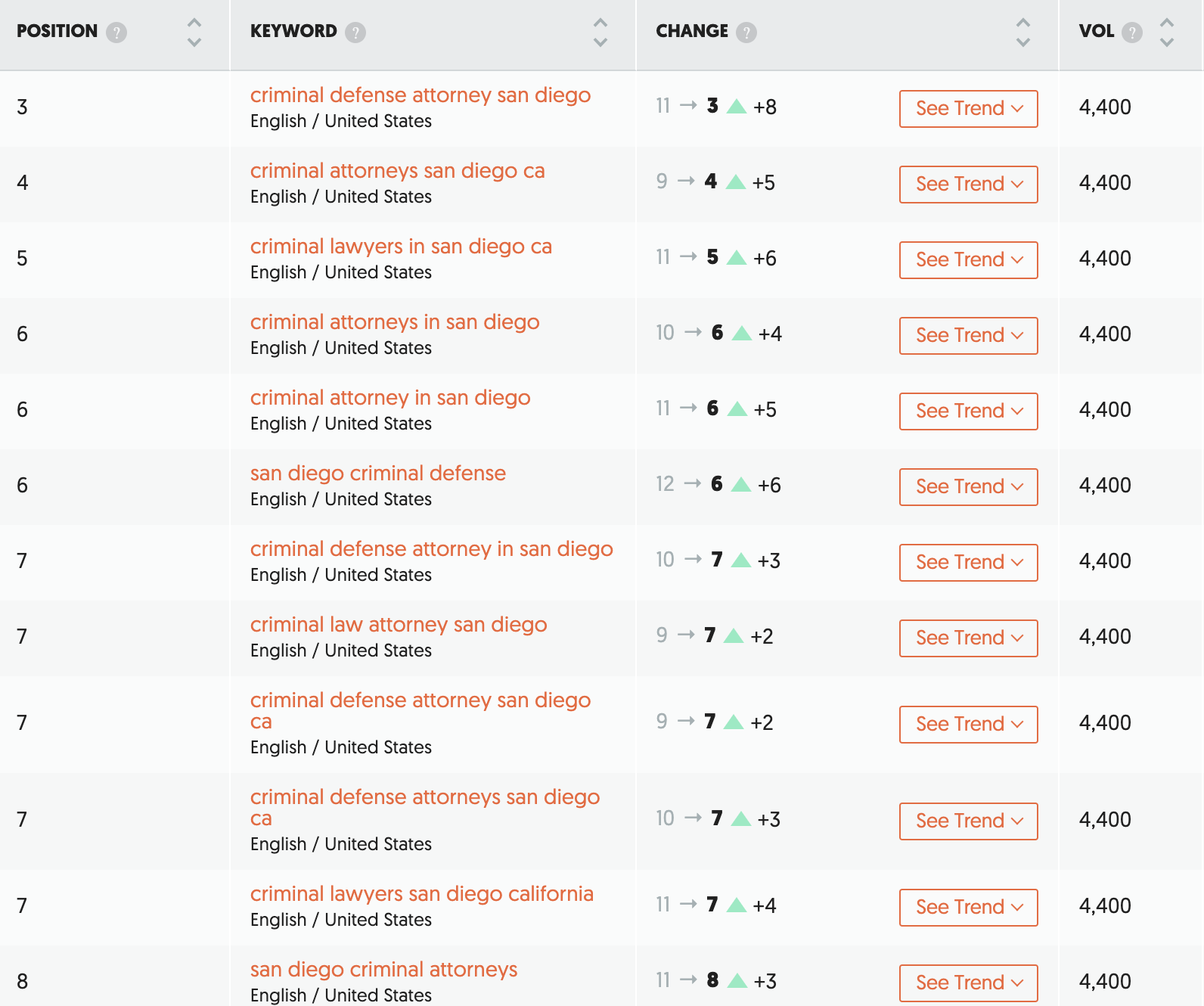
I’m Jen Ruhman, owner of JenRuhman.com. I’ve helped San Diego service businesses—from clinics and med-spas to legal, a criminal defense attorney, home services, etc.—turn their offline strengths into online authority. One client came to me after months of inconsistent leads. We tightened their NAP (name, address, phone) across the web, rebuilt their service pages, added before-and-after photos with context, and published a Q&A blog series. In 6 months, their qualified calls doubled. No gimmicks—just consistent E-E-A-T.
My San Diego playbook for service businesses
Your neighbors care about proximity and proof. I highlight both.
Mapping searcher intent to offers
Emergency intent: quick-contact CTAs, click-to-call, availability language, and short answers above the fold.
Comparison intent: side-by-side service explainers, credentials, pricing ranges, and social proof.
Research intent: deep blog posts, glossary sections, procedure guides, and FAQs with schema.
Local proof signals (photos, bios, NAP, reviews)
We align your Google Business Profile, citations, and site NAP. Then we showcase team bios, certifications, and local community activity—things AI systems and people both trust.
Expertise: Showing Real Skill, Not Just Claims
Content that answers before it sells
AI and human readers skim. That’s why I open pages with short, fact-based answers, then expand into details. If you’re a med-spa, for example, I’ll lead with what the treatment does, who it’s for, safety factors, and recovery basics—then build out the nuances.
Topical maps and internal linking done right
Authority comes from coverage + structure. I build topical maps (the full set of questions your ideal customers ask) and connect those posts to the relevant service pages with descriptive anchor text. This helps AI understand your expertise and routes visitors to the next step.
SGE/AI Overviews optimization patterns
Clear question-answer blocks near the top.
Entities (people, places, services) named consistently.
FAQs aligned with real searches.
Sources of proof: stats, policies, and review snippets.
Schema that matches the page’s true purpose.
Authoritativeness: Earning Mentions & Trust
PR, local citations, and partnerships
I help clients earn coverage that actually matters: local news mentions, chamber listings, neighborhood features, and niche directories with editorial standards. We also partner with complementary businesses for co-authored guides and events. These signals tell search engines you’re known and trusted here.
Review velocity & response strategy
Quantity matters, but recency and responses matter more. I set up simple, ethical systems for steady review flow. We respond professionally, highlight specifics, and weave in keywords naturally. When prospects see thoughtful replies, confidence rises.
Thought-leadership without fluff
I discourage empty “thought leadership.” Instead, we publish evidence-backed posts: process breakdowns, before/after context, and lessons learned. That’s what earns bookmarks and backlinks.
Trustworthiness: Reduce Friction, Increase Conversions
Policies, pricing ranges, and expectations
Hidden prices scare people away. When full pricing isn’t possible, we provide ranges, explain what moves the cost up or down, and describe the process. Trust climbs; leads improve.
Site UX: speed, accessibility, and clarity
Your brand’s best message fails if the page is slow or cluttered. I streamline layouts, improve contrast and font sizes, and cut “mystery clicks.” Accessibility upgrades also signal quality to search engines.
Safety, credentials, and real photos
We show licenses, certifications, and team photos taken in your San Diego space. Real images beat stock every time because they convey true experience.
AI Search & SGE: How I Optimize for Today’s SERPs
Snippet-first writing and structured data
Every key page gets a 2–4 sentence summary at the top answering the main question. Then I layer schema: LocalBusiness, Service, Article, Product (when applicable), and FAQPage. This helps AI extract accurate, verifiable info.
Entities, FAQs, and verification signals
We use consistent names for services, neighborhoods, and practitioners, then support these with FAQs and internal links. This reduces ambiguity and improves how often AI surfaces your brand.
Content freshness and temporal relevance
I timestamp content that changes (pricing, policies, event dates) and refresh it on a schedule. When your info is current, AI systems reward it.
My Step-by-Step E-E-A-T Workflow
Audit → Plan → Publish → Promote → Iterate
Audit: I review content, technical SEO, GBP, citations, reviews, and competitors.
Plan: We prioritize services, build a topical map, and pick quick wins.
Publish: We ship conversion-ready pages and structured blogs.
Promote: PR pitches, partnerships, and social distribution.
Iterate: We refine based on rankings, conversions, and feedback.
Measurement: what we track and why
We track calls, form fills, booked appointments, qualified leads, review velocity, and assisted conversions—not just traffic. Rankings matter, but revenue matters more.
Common Mistakes I Fix Every Week
Thin “About” pages and faceless brands
People hire people. We expand your “About” with your story, qualifications, and reasons to believe—plus real photos and community ties.
Blog posts with no intent or structure
Random posts don’t build authority. We write to intent (informational, comparison, transactional) and route readers to next steps using internal links and CTAs.
Inconsistent NAP and missing schema
I standardize your NAP everywhere and add schema so AI can trust and display your info correctly.
Real Talk: My Personal Rules for Client Success
Transparency beats tricks
No gimmicks, no black-hat shortcuts. E-E-A-T is earned by doing real work and documenting it clearly.
Simple, repeatable systems win
Small, consistent improvements beat sporadic “big pushes.” That’s how we build durable authority.
Ready to Build Authority the Right Way?
I’m local, hands-on, and easy to reach. If you want a SEO expert in San Diego who treats your brand like her own, I’m here to help. We’ll audit, plan, and execute a practical system that compounds.
Call/text me: (619) 719-1315. Prefer email? Reach out through my site and we’ll map your next 90 days.
E-E-A-T isn’t a buzzword; it’s how your real-world excellence gets recognized online. By proving experience, demonstrating expertise, earning authority, and removing trust friction, San Diego businesses can win more often—and more predictably. If you want clear steps and consistent growth, let’s get your brand the visibility it deserves.
FAQs
Q1: How long until I see results from an E-E-A-T strategy?
Most clients see early signals (better engagement, more calls) in 4–8 weeks, with stronger ranking and conversion gains in 3–6 months.
Q2: Do I need new content, or can we improve what I have?
Both work. We usually refresh high-potential pages first, then fill content gaps with targeted posts tied to your services.
Q3: What if my industry is highly regulated?
We highlight credentials, disclaimers, and process transparency. Clear policy pages and medically/legal-reviewed content strengthen trust.
Q4: How important are reviews?
Extremely. Recency, volume, and quality all matter. A consistent review request + response system is a core E-E-A-T signal.
Q5: Can you work with my in-house team?
Absolutely. I often partner with internal teams for content, photos, and PR. My role is to give you the roadmap and keep execution tight.