
Oct 27, 2023 | SEO Tips
When we delve into the realms of content creation and digital marketing, one term that frequently crops up is “editorial content.” But what exactly does this term entail? In this comprehensive guide, we’ll explore the nuances of editorial content, its significance, and how it stands apart from other types of content.
Defining Editorial Content
Understanding Editorial Content Editorial content can be broadly defined as any material in written, visual, or audio form that expresses opinions, insights, or provides in-depth information on a particular topic, subject, or issue.
Characteristics of Editorial Content
Opinionated and Insightful At its core, editorial content is characterized by its opinionated nature. It often reflects the viewpoints, beliefs, and values of the author or the publication’s editorial board.
Well-Researched and Informative Despite being opinionated, high-quality editorial content is always well-researched and backed by facts and evidence. This ensures that the content is not just a rant but an informed opinion that adds value to the reader.
Engages and Provokes Thought Editorial content aims to engage its audience, provoke thought, and initiate discussions. It encourages readers to reflect on issues, form their own opinions, and participate in broader conversations.
The Role of Editorial Content
Building Credibility and Trust Editorial content plays a crucial role in building the credibility and trustworthiness of a publication or a brand. By expressing opinions and providing well-researched insights, it establishes the author or brand as an authority in their field.
Influencing Public Opinion
Shaping Perceptions Through its opinionated nature, editorial content has the power to influence public opinion and shape perceptions on various issues.
Driving Change Beyond just influencing opinions, editorial content can also drive social, political, and economic changes by raising awareness, highlighting issues, and advocating for change.
Different Types of Editorial Content
Opinion Pieces and Commentaries These are pieces where authors express their personal opinions on topics. They are subjective but should still be grounded in facts and logical reasoning.
Analysis and Interpretation This involves providing in-depth analysis and interpretation of events, trends, or data. It goes beyond just reporting facts and adds value through expert insights and context.
Reviews and Critiques Editorial content also encompasses reviews and critiques of products, services, books, films, and more. These pieces provide evaluations based on the author’s experiences and criteria.
Creating Effective Editorial Content
Understanding Your Audience Knowing your audience is crucial when creating editorial content. Understanding their interests, beliefs, and values helps in crafting content that resonates with them.
Maintaining a Balance
Balancing Opinions and Facts While editorial content is opinionated, maintaining a balance between opinions and facts is essential. This ensures credibility and helps in building trust with your audience.
Avoiding Sensationalism It’s important to avoid sensationalism and hyperbole. Staying true to the facts, even while expressing opinions, ensures that the content is taken seriously and respected.
The Future of Editorial Content
Adapting to Changing Trends The world of content is ever-evolving, and editorial content is no exception. Adapting to changing trends, technologies, and audience preferences is key to staying relevant and effective.
Embracing New Formats and Channels
Expanding Beyond Text With the rise of video, podcasting, and other formats, editorial content is expanding beyond traditional text-based articles. Embracing these new formats and channels can help in reaching wider audiences and staying ahead in the content game.
Editorial content is a powerful tool in the arsenal of content creators and marketers. It builds credibility, influences opinions, engages audiences, and drives change. By understanding its nuances, characteristics, and role, and by creating high-quality, balanced, and engaging editorial content, we can leverage its full potential to connect with audiences, establish authority, and make a lasting impact.
FAQs
- What makes editorial content different from other types of content?
- Editorial content is opinionated, insightful, and aims to engage and provoke thought, making it distinct from other more straightforward, objective types of content.
- How does editorial content build credibility?
- By expressing informed opinions, providing insights, and establishing authority on topics, editorial content builds credibility and trust with audiences.
- Can editorial content be in formats other than text?
- Yes, editorial content is evolving to include video, audio, and other formats, expanding its reach and engagement.
- Is it important to balance opinions and facts in editorial content?
- Absolutely, maintaining a balance between opinions and facts is crucial in editorial content to ensure credibility and trustworthiness.
- How does editorial content influence public opinion?
- Through its opinionated nature and ability to engage audiences, editorial content has the power to shape perceptions and influence public opinion on various issues.
Do you want to boost your website’s visibility?
Optimizing your website for search engines is a proven strategy to attract more visitors. With our monthly SEO services, your website can climb the Google rankings, resulting in increased leads and sales.
At Jen Ruhman SEO, we’re one of the top SEO companies in San Diego – our goal is to aid in the online growth of your business. We are confident that an effective SEO plan can lead to substantial growth in both traffic and revenue. Recognized as a leading SEO firm in San Diego, CA, we are just a phone call away when you need our assistance.
Book a complimentary consultation with us today!

Oct 27, 2023 | SEO Tips
What Is Amazon Moments?
In today’s fast-paced digital world, companies are constantly looking for innovative ways to engage their customers and create lasting relationships. Amazon, being a pioneer in the digital transformation, has introduced a revolutionary reward system called Amazon Moments. But what exactly is Amazon Moments, and how can it benefit both businesses and consumers?
Unraveling the Mystery of Amazon Moments
Amazon Moments is a versatile and robust reward delivery system that allows businesses to create compelling and personalized customer experiences. By providing tangible rewards for digital and physical achievements, Amazon Moments has managed to bridge the gap between online engagements and real-world value.
How Does Amazon Moments Work?
For Businesses
Businesses can leverage Amazon Moments to set specific goals or achievements for their users. Upon reaching these predetermined milestones, customers are rewarded with items from Amazon’s vast selection of products. This creates a win-win situation, where businesses can boost engagement and customer loyalty, while customers enjoy tangible rewards.
For Consumers
From a consumer’s perspective, Amazon Moments is like a treasure trove of surprises. Engaging with your favorite brands and achieving set goals not only results in a satisfying sense of accomplishment but also leads to real, valuable rewards. It’s like getting a pat on the back and a gift for your efforts!
The Benefits of Using Amazon Moments
Boosting Customer Engagement
Amazon Moments encourages customers to engage more deeply with brands, as there is a tangible reward at the end of the journey. This heightened engagement leads to increased customer loyalty and, ultimately, higher revenue for the business.
Personalized Customer Experiences
By analyzing customer behavior and preferences, businesses can offer personalized rewards that resonate with individual users. This personal touch fosters a stronger connection between the brand and the customer, enhancing the overall customer experience.
Easy and Secure Reward Distribution
Amazon Moments takes care of the entire reward distribution process, ensuring that rewards are delivered securely and promptly. This seamless process eliminates the need for businesses to manage inventory or handle distribution logistics, allowing them to focus on what they do best.
How to Get Started with Amazon Moments
Getting started with Amazon Moments is straightforward. Businesses need to set their campaign objectives, define the achievements or actions required to earn rewards, and choose the rewards from Amazon’s extensive catalog. Amazon’s user-friendly platform guides businesses through the entire process, ensuring a smooth and hassle-free experience.
Success Stories: Brands Thriving with Amazon Moments
Many brands have already harnessed the power of Amazon Moments to drive customer engagement and loyalty. By creating unique and rewarding customer experiences, these brands have seen a significant uplift in customer interaction and satisfaction.
Navigating the Challenges
While Amazon Moments offers numerous benefits, businesses need to carefully plan and execute their campaigns to avoid common pitfalls. Ensuring that rewards are relevant and attainable is crucial to maintaining customer interest and trust.
Setting Realistic Goals
It’s important for businesses to set realistic and achievable goals for their customers. Setting the bar too high can lead to frustration, while making it too easy may diminish the perceived value of the rewards.
Maintaining a Balance
Finding the right balance between rewarding customers and maintaining profitability is key. Businesses need to ensure that the cost of the rewards does not outweigh the benefits of increased customer engagement and loyalty.
Future of Amazon Moments
As we look ahead, Amazon Moments stands poised to revolutionize the customer engagement landscape. Its ability to create unique, personalized, and rewarding customer experiences positions it as a crucial tool for businesses aiming to thrive in the digital age.
Amazon Moments represents a significant leap forward in the world of customer engagement and loyalty programs. By providing tangible rewards for digital achievements, it has successfully created a system where both businesses and consumers can reap the benefits of increased interaction and loyalty. As we embrace this innovative platform, the future of customer engagement looks brighter than ever.
FAQs
1. How do businesses benefit from using Amazon Moments?
Businesses benefit from using Amazon Moments through increased customer engagement, loyalty, and ultimately, revenue.
2. Can consumers choose their rewards in Amazon Moments?
No, rewards are predefined by the businesses based on customer achievements and engagement.
3. Is Amazon Moments available for all types of businesses?
Yes, Amazon Moments is versatile and can be utilized by businesses of all sizes and industries.
4. How does Amazon Moments ensure secure reward distribution?
Amazon takes care of the entire reward distribution process, ensuring secure and prompt delivery of rewards to customers.
5. Can Amazon Moments be used for physical rewards, or is it limited to digital rewards?
Amazon Moments can be used to offer both digital and physical rewards from Amazon’s extensive product catalog.
Are you on the quest for ways to enhance the traffic flowing to your website?
SEO stands out as the most effective strategy to increase your website’s visibility. Engaging in our monthly SEO services will elevate your rankings in Google searches, opening doors to augmented leads and sales derived from your website.
At Jen Ruhman SEO, bolstering your online business growth is at the core of what we do. We are well-versed in the transformative impact that a meticulously crafted SEO strategy can have on your website’s traffic and revenue. Proudly positioned as one of the leading SEO companies in San Diego, CA, we are just a phone call away, ready to propel your business to new heights.
Don’t miss out on the opportunity; schedule a free consultation with us today! Let’s embark on a journey to unlock the full potential of your online presence together.

Oct 26, 2023 | SEO Tips
When it comes to SEO, understanding the significance of H1 tags is crucial. H1 tags are an integral part of HTML that helps to give structure to web content. They play a pivotal role in optimizing a website for search engines and enhancing the user experience. In this comprehensive guide, we will delve into what H1 tags are, their importance in SEO, and how you can use them effectively.
What Are H1 Tags?
H1 tags are HTML elements used to define the main heading of a page. They are the largest and most significant heading on a page, usually appearing at the top. The ‘H’ in H1 stands for ‘heading,’ and the ‘1’ signifies its level of importance. In HTML, headings range from H1 to H6, with H1 being the highest and H6 the lowest.

Here’s a screenshot of this article’s H1 tag
The Role of H1 Tags in HTML Structure
The primary purpose of H1 tags is to provide a clear and concise summary of the page’s content. They help to organize and structure the content, making it easier for users to read and navigate. H1 tags also play a crucial role in assisting screen readers, aiding visually impaired users in understanding the structure of a webpage.
Why Are H1 Tags Important for SEO?
Search engines use H1 tags to understand the main topic of a page. They are a critical factor in on-page SEO, as they help to signal to search engines what the page is about. Properly optimized H1 tags can contribute significantly to a website’s visibility on search engine result pages (SERPs).
The Impact of H1 Tags on SERPs
When a user performs a search, search engines crawl through webpages to find relevant content. H1 tags serve as a guide, helping search engines to quickly identify the main topic of a page. This, in turn, increases the likelihood of the page ranking higher in SERPs for relevant queries.
H1 Tags and User Experience
Apart from their role in SEO, H1 tags also contribute to a better user experience. A clear and descriptive H1 tag helps users to quickly understand what the page is about, reducing bounce rates and encouraging longer page visits.
Best Practices for Using H1 Tags
Optimizing H1 tags is not just about pleasing search engines; it’s also about enhancing the user experience. Here are some best practices to follow:
Keep It Short and Sweet
Aim for brevity and clarity in your H1 tags. Keep them short, concise, and to the point, ensuring they accurately reflect the content of the page.
Include Relevant Keywords
Incorporate relevant keywords into your H1 tags. This helps to boost your SEO and ensures that your content is easily discoverable by users searching for related topics.
Use Only One H1 Tag Per Page
While it’s technically possible to use multiple H1 tags on a page, it’s best practice to use just one. This helps to maintain a clear and hierarchical structure, ensuring that your main topic stands out.
How to Effectively Use H1 Tags
Using H1 tags effectively is about striking the right balance between SEO optimization and user readability. Here’s how you can do it:
Align H1 Tags with the Page Title
Ensure that your H1 tag aligns closely with the page title. This consistency helps to reinforce the topic and provides a clear and coherent experience for the user.
Be Descriptive and Engaging
Your H1 tag should be descriptive and engaging, compelling users to read on. Use active language and consider the user’s intent when crafting your H1 tag.
Ensure Mobile-Friendliness
With the increasing prevalence of mobile browsing, ensuring that your H1 tags are mobile-friendly is essential. They should be easily readable on smaller screens, contributing to a seamless mobile experience.
Conclusion
Understanding and utilizing H1 tags effectively is a crucial aspect of SEO. They play a significant role in helping search engines understand the main topic of a page, contributing to higher rankings in SERPs. Additionally, well-optimized H1 tags enhance the user experience, encouraging longer visits and reducing bounce rates. By following best practices and ensuring your H1 tags are descriptive, engaging, and SEO-friendly, you are setting the stage for SEO success.
FAQs
Q1: Can I use multiple H1 tags on a single page? While it’s possible to use multiple H1 tags on a page, it’s generally recommended to use just one to maintain a clear and hierarchical structure.
Q2: Do H1 tags directly impact my website’s SEO? Yes, H1 tags play a crucial role in SEO. They help search engines understand the main topic of a page, contributing to higher rankings in SERPs.
Q3: Should I include keywords in my H1 tags? Absolutely, incorporating relevant keywords into your H1 tags can significantly boost your SEO and make your content more discoverable.
Q4: How long should my H1 tag be? Aim to keep your H1 tag short, concise, and to the point, ensuring it accurately reflects the content of the page.
Q5: How do H1 tags contribute to the user experience? H1 tags enhance the user experience by providing a clear and concise summary of the page’s content, making it easier for users to read and navigate.
Unlock the Full Potential of Your Online Presence: Exceptional SEO Services in San Diego Await!
If you’re aiming to make your website super popular and fill it with loads of visitors, you’ve got to check out our amazing SEO services in San Diego! We’re really good at turning websites into total traffic magnets, ensuring that more people can find and visit your site. Give us a call or send a text to (619) 719-1315, and let’s get started on boosting your site’s visibility together! Trust us, when it comes to being an SEO expert in San Diego, we totally rock at it. So, don’t miss out! If you want more people visiting your website, reach out and hire us today. You can call or text us at (619) 719-1315. Let’s make your website the cool place to be online!
Oct 23, 2023 | SEO Tips
Why is SEO So Expensive? – Jen Ruhman, San Diego’s SEO Expert
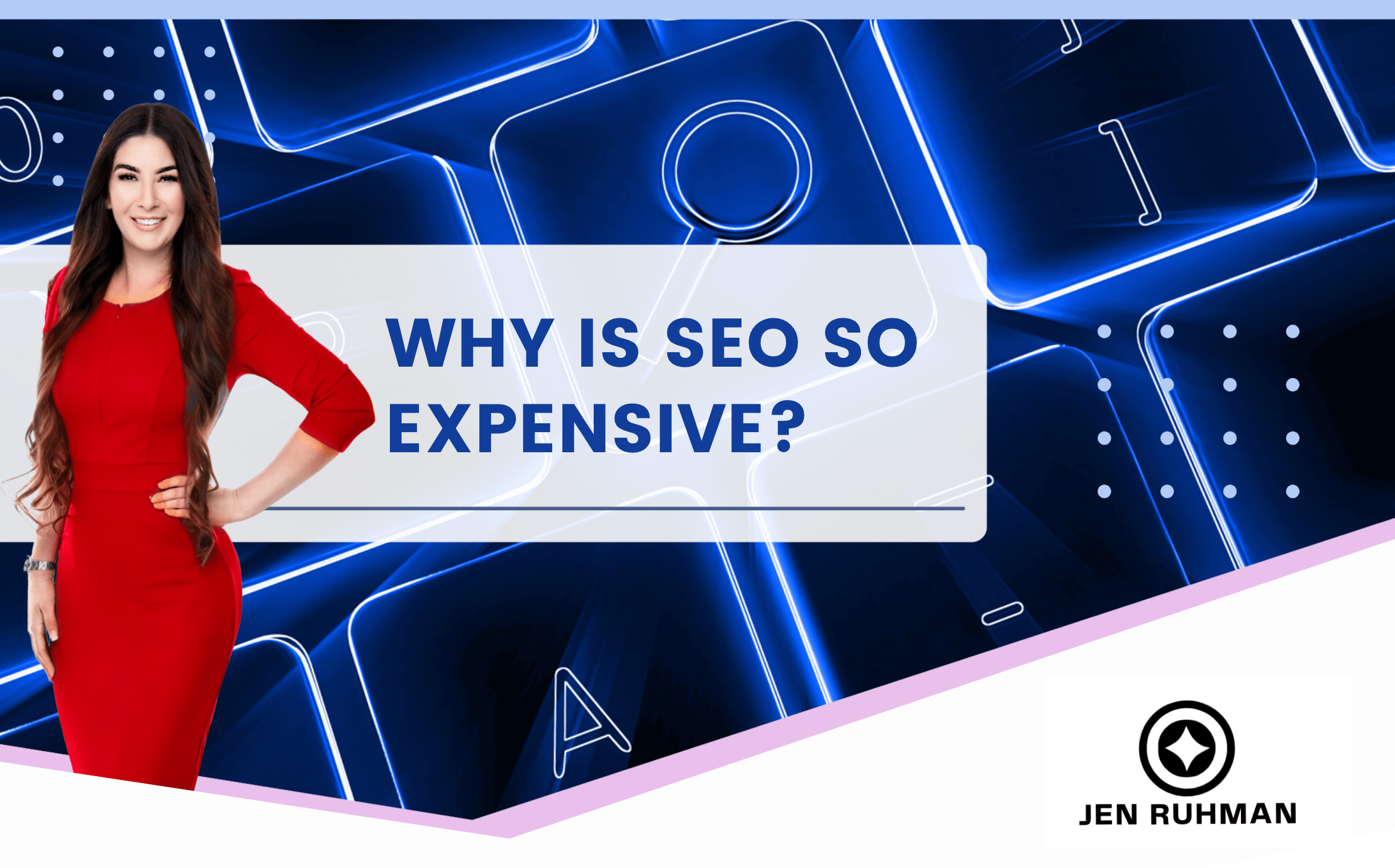
Introduction to SEO Costs
Ever wondered why SEO seems like such a significant investment? Remember those days when you could just stuff a webpage with keywords and rank at the top of search engine results? Ah, the good ol’ times. But as Bob Dylan sang, “The times they are a-changin’.”
The evolution of SEO
Just like your favorite classic rock songs, SEO has evolved over time. Initially, basic strategies sufficed, but now it’s more sophisticated, complex, and, let’s be real, expensive. It’s like moving from a simple acoustic guitar to a full-fledged rock band with all the instruments.
Importance of SEO today
In today’s digital age, a strong online presence is essential. Think of SEO as the amplifier that makes your brand’s voice loud and clear in the vast concert of the internet. Without it, you’re just another whisper in a cacophony of noises.
Factors that Drive SEO Costs
Skilled Professionals
Behind every successful SEO campaign is a team of dedicated professionals. They’re the rockstars who keep up with the ever-changing algorithms, strategize, and execute plans. You’re not just paying for a service; you’re investing in their expertise.
Cutting-edge tools and software
SEO isn’t just about intuition; it’s backed by data. High-quality tools, often with steep subscription fees, are crucial. It’s like a musician investing in the best instruments – they’re essential for producing the best tunes.
In the realm of SEO, certain tools have risen to the forefront, becoming indispensable assets for professionals. Tools like SEMrush, Ahrefs, and Moz Pro offer deep insights into keyword research, backlink analysis, and competitive data.
Then there’s Screaming Frog, which crawls websites to provide vital on-page SEO data. These tools, while remarkable in their capabilities, come with a hefty price tag. It’s akin to a musician not just buying a top-tier guitar, but also investing in the best amps, pedals, and studio equipment.
They’re not just luxuries; they’re necessities in the ever-competitive landscape of search engine optimization.
Continuous research and updates
Google updates its algorithms frequently. Staying on top requires constant vigilance and adaptation. Remember when vinyl was the mainstay, and then CDs took over? SEO professionals have to keep up with the times, too.

Content creation and marketing
Ever heard the phrase, “Content is king”? In the SEO world, it reigns supreme. Quality content that’s relevant and engaging doesn’t just magically appear. It takes time, effort, and creativity.
Diving deeper into the realm of content, it’s essential to realize that while “Content is king,” consistency is its queen. Producing regular, valuable content establishes authority, builds trust, and engages the audience. Whether it’s blog posts, infographics, videos, or podcasts, each piece must resonate with the target audience and address their needs or questions. Moreover, once the content is created, it needs effective marketing. Sharing on social media, email campaigns, and influencer collaborations are just a few ways to amplify its reach.
Think of it like writing a hit song; it’s not just about crafting the tune but also ensuring it gets radio play and reaches the ears of eager listeners.
The Value SEO Brings
Improved online visibility
SEO is your ticket to the main stage. It makes you visible to your target audience, ensuring that they find you amidst the myriad of websites out there.
Building Credibility and Trust
Beyond just visibility, a well-executed SEO strategy cements your brand’s credibility. When you consistently appear on the first page of search results, it subtly communicates to users that search engines trust your content, deeming it relevant and authoritative. It’s akin to an artist frequently headlining major concerts; their regular presence signals their quality and appeal to both new and returning fans. Over time, this heightened trust can translate to increased user loyalty, repeat visits, and even conversions, making the effort poured into SEO not just about being seen, but about establishing a lasting reputation in the digital arena.

High-quality traffic
It’s not just about quantity but quality. SEO brings in visitors genuinely interested in what you offer. It’s like having a fanbase that genuinely loves your music, not just random listeners.
Nurturing Conversions Through Intent
Tapping into this high-quality traffic means tapping into users with intent. When someone uses specific keywords related to your products or services, they’re often at a stage where they’re considering a purchase or seeking more information. This intent-driven traffic is a goldmine for conversions.
Think of it as fans at a concert; they’re not just there because they stumbled upon it, but because they sought it out, bought tickets, and eagerly awaited the show. By optimizing your content for these intent-driven keywords, you’re essentially setting the stage for meaningful interactions, leading them down the path from mere interest to definitive action.
Long-term gains
While SEO requires an upfront investment, its benefits are long-term. It’s not a one-hit-wonder; it’s an evergreen album that keeps bringing in royalties.
Comparing SEO to Traditional Advertising
ROI and longevity
Traditional ads are like concert tickets – they’re effective for the event’s duration. SEO, on the other hand, is your album sales, continuing to bring returns long after the initial release.
Sustainable Growth Over Flashy Spikes
While traditional ads offer a burst of visibility, it’s often fleeting, akin to the dazzling fireworks that light up the sky momentarily and then fade. SEO, however, provides a steady flame that keeps burning, ensuring consistent visibility and growth. It’s a strategic investment that, over time, compounds in its effectiveness. Think of it as an artist’s classic hit that keeps getting airplay year after year. Even when new songs come and go, that classic remains, delivering value. Similarly, a well-optimized website can keep attracting and converting users long after the initial SEO work, offering a sustainable advantage in the ever-evolving digital marketplace.
Tailored strategies
Every brand is unique, and so should be its SEO strategy. It’s like customizing a playlist for a specific mood or event.
DIY vs Professional SEO
Time and expertise
Sure, you could learn to play the guitar by watching videos, but would you be concert-ready? Similarly, DIY SEO can’t match the finesse of professionals.
Pitfalls of DIY SEO
Missteps in SEO can cost you. Imagine a musician hitting the wrong note at a live concert – it’s glaring and hard to recover from.
SEO might seem pricey, but its value is undeniable. In the grand concert of the online world, it ensures you have the best stage, instruments, and audience. So, is SEO worth the investment? Absolutely! It’s the backstage pass to your brand’s success.
Did you like the rock band analogy I used for SEO?
Riding the Riffs of SEO?
Much like a rock band that knows how to get the crowd going, I’ve fine-tuned the art of SEO to get your brand rocking online. Proudly strumming the chords of expertise, I’m not just any SEO player—I’m the lead guitarist in this gig! Caught off-guard? That’s the kind of unexpected yet impactful approach I bring.
Ready to amplify your online presence and get your website jamming with organic traffic? Let’s start the encore.
Dial me up at (619) 719-1315 and let’s hit the high notes together!
BTW, I totally ROCK as an SEO expert in San Diego. Did you like that too? 😉
I bet you didn’t see that one coming. If you’re looking to add more organic traffic to your website. Hire me today! call/text me now: (619) 719-1315
FAQs
- Why is it crucial to update SEO strategies regularly? With the ever-changing algorithms, staying updated ensures you remain visible to your audience.
- How long before I see results from an SEO campaign? SEO is a long-term game. While initial changes can be seen in a few months, significant results often take 6-12 months.
- Can I do SEO on my own? While there are many DIY resources, professional SEO brings expertise and experience that’s hard to replicate.
- Is SEO more effective than traditional advertising? Both have their merits. However, SEO offers long-term benefits and targets a specific online audience.
- How often do search engine algorithms change? Major changes happen a few times a year, but minor updates occur more frequently.

Oct 20, 2023 | SEO Tips
Unlocking the Potential of SEO for Business Coaching
If you are an online business coach, you may already understand the importance of developing a strong web presence. But does your web presence include search engine optimization (SEO)? If not, you’re missing out on one of the most powerful tools available to increase your visibility and reach more potential clients.
Let’s explore why SEO is so important for business coaches.
Hi It’s me, JEN – I follow a lot of business coaches on Instagram and their #1 problem is attracting clients that actually convert!
Believe it or not, online business coaches make a lot of content and gain a lot of followers and views but are very seldom able to convert an online fan into a paying customer. (especially high ticket customers)
Let me tell you why this is… SEO converts 8x better than social media and paid advertising. TA-DA!
Why SEO Is Important for Your Business Coaching
SEO is important because it helps ensure that your website appears in the top search results when potential clients search for a business coach. This means that more people will find your website and be exposed to your services, which gives you a greater chance to provide those services and increase your client base.
But SEO isn’t just about making sure people can find your website; it’s also about providing valuable content that makes them want to stick around — and maybe even contact you!
Quality content helps build trust with potential clients by showing them that you are knowledgeable in their chosen field, which increases the likelihood that they will hire you as their business coach. In addition, quality content helps establish credibility within the field of business coaching and gives current clients something to refer back to if they need additional information or assistance.
How You Can Leverage SEO for Your Business Coaching
To get started with SEO, there are several steps you can take: firstly, create an effective keyword strategy.
Research relevant keywords related to business coaching and use those words throughout your website — especially in title tags, meta descriptions, headings, and titles — so that when people search using those terms, they’ll be directed to your page.
Secondly, start building backlinks by connecting with other websites and blogs related to business coaching; this will help show Google that yours is an authoritative source on the topic.
Finally, create high-quality content regularly—this could include blog posts or e-books—to ensure that visitors stay engaged with what’s on offer and come back for more!
Search engine optimization (SEO) is essential for any online business coach who wants to grow their client base and reach new heights in their career. By leveraging effective keywords, building backlinks from credible sources, and creating quality content regularly, you can increase visibility online and make sure potential clients can find you easily when searching for a business coach. With SEO on your side, the possibilities are endless!
Are you an online business coach looking for better SEO services?
Jen Ruhman SEO offers the best and most affordable SEO services for online business coaches. We can help you increase your website traffic, leads, and sales.
As an SEO company in San Diego, I know that as an online business coach, you want to provide the best possible experience for your clients. That’s why we offer a wide range of expert SEO services that are designed to help you reach your target audience and get more clients.
Contact us today to learn more about our SEO services!
Oct 11, 2023 | SEO Tips
If you’re trying to improve your visibility on Google, you’ve probably heard the terms SEO and Local SEO used almost interchangeably.
They’re closely related, but they’re not exactly the same.
I’ve worked in SEO for more than 20 years, and one of the things I often explain to business owners is that Local SEO is a specialized part of SEO.
Traditional SEO focuses primarily on improving a website’s visibility in organic search results.
Local SEO adds another layer: location.
For a San Diego business, that might mean trying to appear when someone searches:
- SEO company San Diego
- financial advisor near me
- personal trainer San Diego
- plumber in Santee
- spray tan La Jolla
And for many local businesses, the answer isn’t choosing SEO or Local SEO.
You need the two working together.
Quick Answer: SEO vs Local SEO
The biggest difference between SEO and Local SEO is geographic intent.
SEO focuses on improving website visibility for relevant organic searches.
Local SEO focuses on improving visibility when the search is connected to a particular location, service area or nearby business.
Local SEO can therefore involve traditional website SEO plus elements such as:
Google Business Profile
Google Maps
proximity
reviews
business categories
accurate business information
location and service-area pages
and other information that helps search engines understand where the business operates.
If you want the complete process, read my Local SEO guide for San Diego businesses.
What Is SEO?
SEO stands for Search Engine Optimization.
It’s the process of improving a website and its content so search engines can better crawl, understand and connect its pages with relevant searches.
SEO can include:
keyword research
search intent
technical SEO
website architecture
content optimization
internal linking
backlinks
structured data
page experience
and content development.
Not every SEO strategy needs to focus on a particular city.
For example, an e-commerce company selling products nationwide might want customers from anywhere in the United States.
A software company may serve customers around the world.
A publisher may want readers regardless of where they live.
Those businesses still need SEO, but geography may not be a major factor in determining who can become a customer.
What Is Local SEO?
Local SEO focuses on searches where location matters.
It’s particularly relevant for businesses serving customers at physical locations or within defined geographic areas.
Examples include:
dentists
attorneys
financial advisors
restaurants
gyms
med spas
hair-restoration clinics
plumbers
electricians
roofers
contractors
and many other local service businesses.
For these businesses, being visible to the right person in the right geographic market can be much more valuable than generating traffic from people across the country.
SEO vs Local SEO: The Main Difference
Here’s the simplest way I explain it.
Traditional SEO asks:
Is this page a relevant and useful result for this search?
Local SEO introduces additional questions, including:
Is this business relevant to someone searching in this particular location?
Consider these two searches:
How to choose an SEO company
and:
SEO company San Diego
They’re clearly related.
But they don’t have exactly the same intent.
Someone searching the first phrase could be looking for educational information.
Someone searching the second phrase is much more likely to be looking for an SEO company serving San Diego.
Understanding that difference is part of search intent, and it’s one of the first things I consider when deciding which page on a website should target a particular search.
1. Local SEO Has a Geographic Component
Location is the most obvious difference.
Traditional SEO can target searches that have no geographic component at all.
Local SEO frequently involves searches containing a city, neighborhood, county or region.
For example:
financial advisor San Diego
personal trainer La Jolla
plumber Santee
But someone doesn’t necessarily have to type the location.
A search such as:
personal trainer near me
also has obvious local intent.
Search engines can use location and other contextual information to provide locally relevant results.
2. Local SEO Can Include Google Maps
Another major difference is the search-result experience.
Traditional SEO is generally associated with organic website listings.
Local searches can also trigger map-based results featuring nearby or relevant businesses.
That gives a local business potentially more than one opportunity to appear.
It might appear through its website in the organic results while also appearing through its Google Business Profile in local results.
I don’t treat those as completely separate strategies.
The website and Google Business Profile should accurately support the same real business.
3. Google Business Profile Is Much More Important to Local SEO
A Google Business Profile isn’t necessary for every traditional SEO strategy.
For an eligible local business, however, it can be an important part of local search visibility.
The profile can communicate information such as:
business name
categories
location or service area
phone number
website
hours
services
photos
and reviews.
But I don’t recommend treating Google Business Profile as a substitute for website SEO.
The profile can help someone discover the business.
The website can provide much deeper information about its services, expertise, process and value.
For many businesses, I want both working together.
4. Keyword Research Is Different
Traditional keyword research might uncover searches such as:
retirement planning
how does hair restoration work
how to choose an SEO company
Local keyword research might reveal:
financial advisor San Diego
hair restoration Los Angeles
SEO expert San Diego
The solution isn’t simply attaching a city name to every keyword.
I want to understand what the person is actually looking for and which page should satisfy that intent.
That’s also why I don’t recommend creating separate pages for every tiny keyword variation.
5. Reviews Matter More in Local Search
Reviews are especially visible when someone is evaluating local businesses.
A potential customer might compare several businesses directly in Google before ever visiting a website.
Reviews can help that person evaluate things such as reputation, customer experience and whether the company appears trustworthy enough to contact.
Google also explains that review count and review scores can factor into local ranking.
That doesn’t mean you should tell customers which keywords to put in their reviews.
I prefer a straightforward process for requesting genuine feedback from real customers.
6. Local SEO Has to Consider Proximity
This is a major difference that business owners sometimes overlook.
You can’t completely control where the searcher is located.
A business located close to someone searching for a nearby service may face a different local search environment than a business farther away.
That doesn’t mean proximity is the only thing that matters.
But it does mean local SEO has a geographic variable that many traditional organic SEO campaigns don’t have to consider in the same way.
7. Local SEO Uses Location and Service-Area Information
Some businesses operate from one physical location.
Others have several offices.
Some travel to customers across a service area.
Those differences affect how I structure a local website.
A company with several legitimate locations may need separate location pages.
A service-area business may need content explaining where its services are actually available.
But I don’t recommend producing dozens of nearly identical pages simply by swapping city names.
Each page should have a legitimate purpose for the customer.
8. Traditional SEO and Local SEO Both Need Strong Websites
One misconception I see is that Local SEO is basically Google Business Profile optimization.
It’s not.
A local business still benefits from a strong website.
The website can help explain:
what the business does
which services it provides
who it serves
where it operates
why someone should trust it
and how a potential customer can take the next step.
Technical SEO, useful content, internal links and strong service pages still matter.
That’s why Local SEO isn’t separate from SEO.
It builds on many of the same fundamentals.
9. Authority Matters to Both
Traditional and local businesses can benefit from being mentioned and linked to by legitimate websites.
The opportunities may look different depending on the business.
For a local company, relevant mentions might come from:
local publications
professional organizations
community organizations
industry associations
partnerships
events
or other legitimate sources.
I care much more about whether a link or mention makes sense than whether it came from a website with “San Diego” in its domain name.
That’s part of why I prefer digital PR and meaningful link building over accumulating random directory links.
Who Needs Local SEO?
Local SEO makes the most sense when geography affects whether someone can realistically become your customer.
That includes many:
local professional services
healthcare providers
restaurants
retail businesses
home-service companies
beauty businesses
fitness businesses
law firms
financial professionals
and service-area businesses.
If customers commonly search for your service with:
a city
a neighborhood
“near me”
a county
or another geographic modifier, Local SEO is probably relevant to your business.
Who Needs Traditional SEO?
Traditional organic SEO is particularly important when customers aren’t restricted to one geographic area.
Examples can include:
e-commerce companies
software businesses
national service providers
publishers
online education businesses
national consultants
and companies serving customers across multiple states or countries.
Those businesses can still have local SEO needs, but location may play a smaller role in their overall search strategy.
Can You Need Both SEO and Local SEO?
Absolutely.
In fact, this is common for the businesses I work with.
Imagine a San Diego business that wants to appear in Google Maps when someone nearby searches for its service.
That’s Local SEO.
The same business may also want its service pages appearing in organic Google results.
That’s traditional website SEO with local intent.
It might also publish educational resources answering questions potential customers ask before they’re ready to hire someone.
That’s organic SEO too.
Those strategies can support each other.
I don’t want the Google Business Profile telling one story while the website tells another.
I want the company’s:
website
Google Business Profile
services
location information
reviews
content
and broader presence across the web
to accurately represent the same business.
What About AI Search?
People now discover businesses through more than traditional Google results.
They may also research companies using AI-powered search features and assistants.
I don’t think that requires throwing away traditional SEO or Local SEO.
The fundamentals are still useful:
Make it clear who the business is.
Clearly explain what it does.
Make accurate location and service-area information available.
Publish genuinely useful information.
Build a recognizable reputation.
Earn legitimate third-party mentions.
And make the website easy for people and search systems to understand.
I’ve written separately about how AI search is changing Local SEO if you want to explore that subject more deeply.
SEO vs Local SEO: Which One Should You Use?
It depends on how your business gets customers.
If your customers can come from almost anywhere, traditional SEO may deserve most of your attention.
If customers need to be located within a particular geographic market, Local SEO becomes much more important.
For many local businesses, though, I don’t think the useful question is:
Should I do SEO or Local SEO?
The better question is:
How should my website SEO and local presence work together?
That’s the strategy I prefer.
A Simple Example
Let’s say you own a plumbing company serving San Diego.
You might want:
your Google Business Profile appearing for relevant nearby searches
your plumbing service pages ranking organically
useful pages explaining the areas you serve
reviews from legitimate customers
accurate business information across important platforms
and educational content answering common plumbing questions.
That’s not two completely separate marketing strategies.
It’s a coordinated search strategy with a strong local component.
SEO vs Local SEO FAQs
What is the main difference between SEO and Local SEO?
SEO broadly focuses on improving website visibility in organic search results. Local SEO adds geographic considerations and local search elements that help businesses become visible for searches connected to a particular area.
Is Local SEO part of SEO?
Yes. Local SEO is a specialized area of SEO. It uses many of the same fundamentals while placing additional emphasis on location and local search.
Does Local SEO only affect Google Maps?
No. A local business can appear in map-based results as well as traditional organic website results.
Do I need a Google Business Profile for Local SEO?
For businesses eligible for Google Business Profile, it can be an important part of local search visibility. Your website should still support and expand on the information presented in the profile.
Can a service-area business use Local SEO?
Yes. Businesses that travel to customers can use Local SEO even when customers don’t visit a storefront. The strategy should accurately reflect the real business and areas it serves.
Do I need both SEO and Local SEO?
Many local businesses benefit from both. Website SEO can improve organic visibility while Local SEO addresses the geographic elements involved in finding a nearby or locally relevant business.
Are location pages good for Local SEO?
They can be. Location pages should provide genuinely useful information for people in that market rather than duplicating the same page and replacing one city name with another.
Want Help With SEO or Local SEO in San Diego?
If you’re not sure whether your business needs traditional SEO, Local SEO or a combination of both, I can help you identify where the biggest opportunities are.
I’ve worked in SEO for more than 20 years, and I work directly with businesses on organic rankings, Google Business Profile optimization, website structure, content, authority and local search visibility.
For a deeper look at Local SEO specifically, read my complete Local SEO guide for San Diego businesses.
Or learn more about working directly with my San Diego SEO company.
Get found. Get trusted. Get chosen.
— Jen Ruhman
San Diego SEO Expert